AI Cover Letter Generator vs Writing Your Own: Pros and Cons

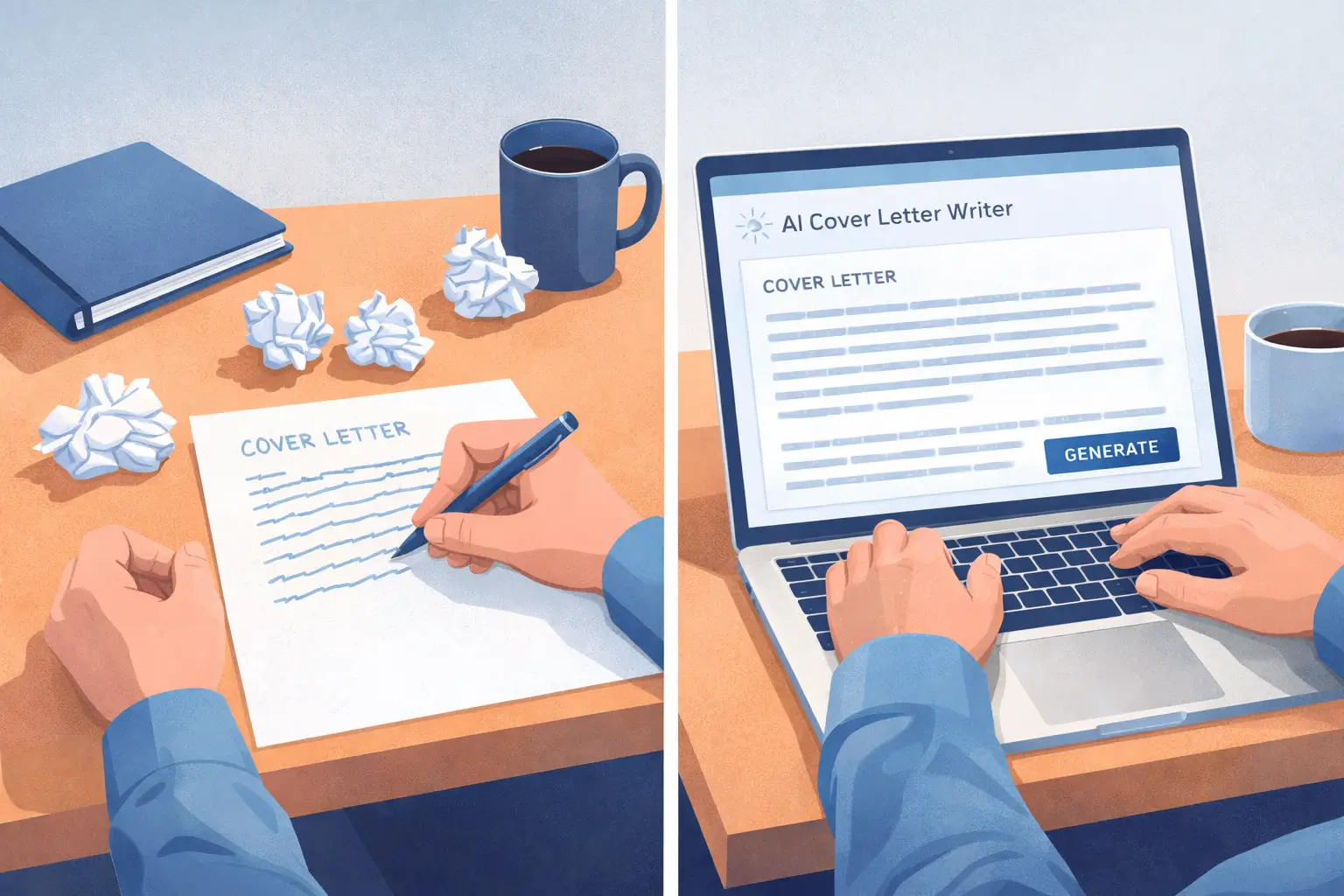
Here's the reality of job searching in 2026: you're applying to dozens of roles, each one demanding a tailored cover letter. Writing a unique, compelling letter from scratch every time is exhausting. But submitting something that reads like a robot wrote it won't get you hired either.
AI cover letter generators have matured rapidly over the past two years. They're faster, smarter, and better at matching job descriptions than ever before. Yet hiring managers still value authenticity — and some actively reject applications that feel AI-generated. So where does that leave you?
This guide breaks down the real pros and cons of AI cover letter generators versus writing your own, and shows you how to get the best of both approaches.
How AI Cover Letter Generators Work
Modern AI cover letter tools do more than fill in a template. They typically analyze the job description you paste in, cross-reference it with your resume or profile data, and generate a draft that matches the role's requirements, tone, and keywords.
The best tools in 2026 go further. They adjust for industry norms, incorporate ATS-friendly formatting, and even suggest which achievements from your background to highlight. Some, like Seekario's AI Cover Letter Generator, let you control the tone, length, and emphasis — so the output sounds like you, not a template.
That said, no tool is perfect. The output is only as good as the input you provide and the editing you do afterward. Understanding the strengths and weaknesses of AI-generated cover letters helps you use them strategically.
Pros of Using an AI Cover Letter Generator
Speed That Actually Matters
Writing a good cover letter from scratch takes 30–60 minutes. An AI generator produces a solid first draft in under a minute. When you're applying to 10 or more positions a week, that time savings adds up to hours you can spend on networking, interview prep, or researching companies.
This isn't about cutting corners. It's about allocating your energy where it has the highest return.
Consistent Quality Across Applications
Everyone has off days. Maybe you're tired after applying to five jobs, and cover letter number six comes out flat. AI generators maintain a consistent quality baseline. They don't get fatigued, skip sections, or forget to mention key qualifications.
This consistency is especially valuable for job seekers managing high-volume applications where maintaining quality across every letter is difficult.
Better Keyword Optimization
ATS systems don't just screen resumes — many companies also filter cover letters for relevant keywords. AI tools are naturally good at identifying and incorporating the exact terminology from a job description. They catch keywords you might overlook, like specific technical certifications, methodology names, or industry jargon.
Structural Guidance
Not sure how to open your letter? Struggling with the closing paragraph? AI generators handle structure well. They know the standard format that hiring managers expect, and they organize your points logically. For people who aren't confident writers, this scaffolding is genuinely helpful.
Reduced Writer's Block
Staring at a blank page is the worst part of cover letter writing. Even if you plan to heavily edit the output, having an AI-generated draft gives you something to react to. It's easier to rewrite a paragraph than to create one from nothing.
Cons of Using an AI Cover Letter Generator
The "Generic" Problem
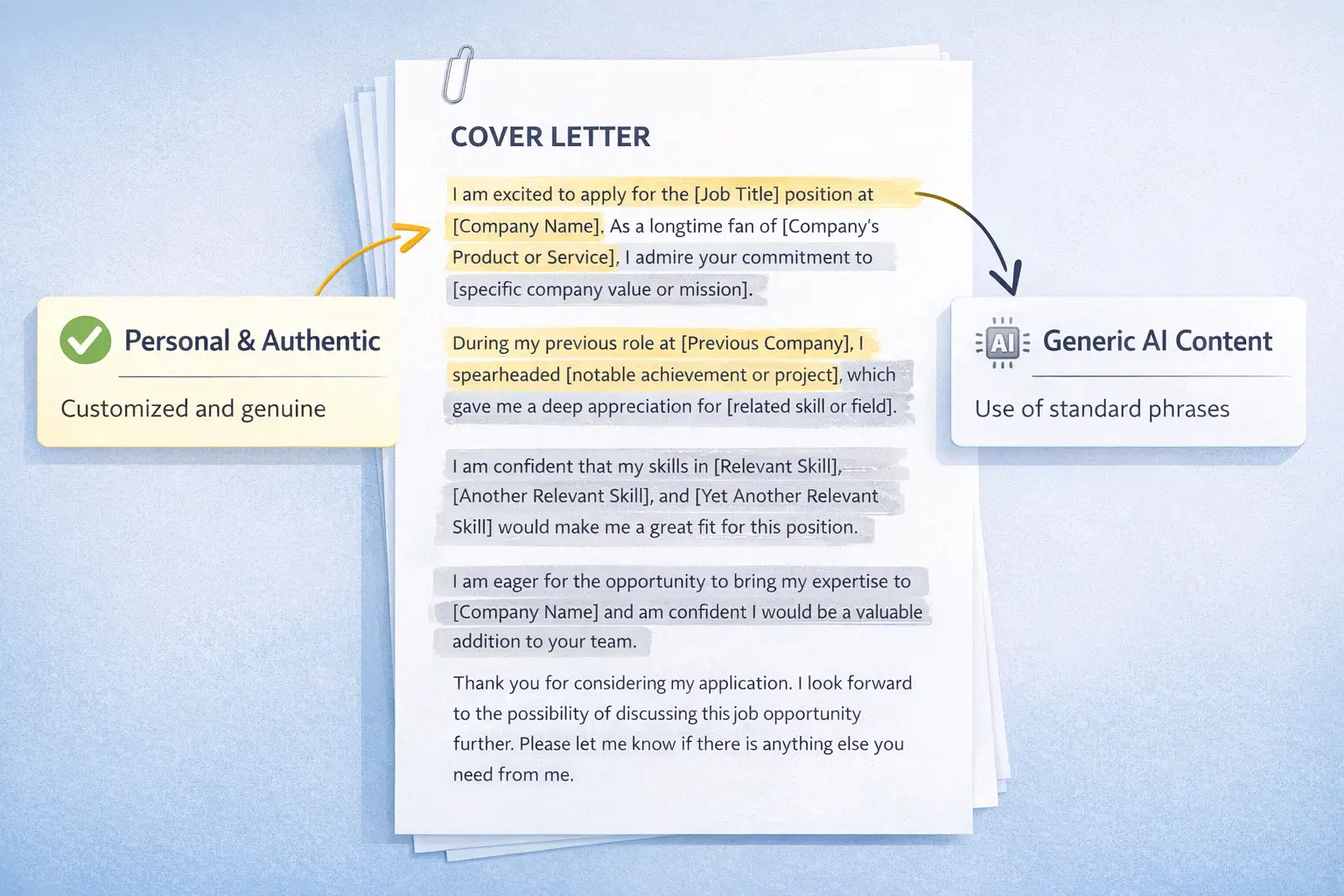
This is the biggest risk. AI tools trained on thousands of cover letters tend to produce language that sounds polished but interchangeable. Phrases like "I am excited to bring my skills to your dynamic team" appear in AI-generated letters constantly. Hiring managers who read hundreds of applications can spot this pattern.
A 2025 survey found that about 80% of hiring managers reported negative reactions to cover letters they perceived as fully AI-generated. The concern isn't that you used a tool — it's that the letter doesn't sound like a real person with a genuine reason for applying.
Missing Your Authentic Voice
Your cover letter is supposed to reveal something about you that your resume can't. A specific story about why you're drawn to this company. A connection to the mission that goes beyond the job description. A personality that makes the hiring manager want to meet you.
AI can approximate this if you feed it detailed prompts, but it can't invent authentic stories or emotional connection from scratch. That part has to come from you.
Risk of Factual Errors
AI generators sometimes fabricate details. They might attribute achievements to you that aren't on your resume, invent company-specific knowledge you don't have, or misstate your qualifications. If a hiring manager catches an inaccuracy, your credibility is gone.
Always fact-check every claim in an AI-generated draft. Every number, every company reference, and every skill mentioned needs to be verified against your actual experience.
Over-Reliance Kills Your Skills
If you outsource every cover letter entirely to AI, your own writing muscles atrophy. When you get to the interview stage — where you need to articulate your value verbally and in follow-up emails — you won't have the practice. The cover letter writing process forces you to think clearly about why you want a role and what you bring. Skipping that mental exercise has a cost.
Detection Is Getting Better
More companies in 2026 are using AI detection tools during the hiring process. While these detectors aren't perfect, heavily AI-generated text has recognizable patterns: overly consistent sentence length, formulaic transitions, and a lack of specific, personal detail. Getting flagged can move your application to the reject pile.
Pros of Writing Your Own Cover Letter
Authenticity That Stands Out
A cover letter written in your own voice — with a specific story, a genuine reason for applying, and personality — stands out precisely because so many applicants are submitting AI-generated content. Authenticity has become a competitive advantage.
Complete Control Over Messaging
When you write your own letter, you choose exactly which experiences to highlight, which narrative to tell, and how to position yourself. You can be strategic about addressing gaps, pivoting your career story, or emphasizing a unique angle that no AI would think to include.
Deeper Preparation for Interviews
The process of researching a company and writing a thoughtful cover letter prepares you for interviews. You've already articulated your value proposition, identified connections between your experience and the role, and thought critically about the company. That preparation pays off when you're sitting across from the hiring manager.
Cons of Writing Your Own Cover Letter
It's Time-Intensive
A well-researched, tailored cover letter takes 30–60 minutes minimum. If you're applying to 15 positions a week, that's 7–15 hours just on cover letters. For many job seekers — especially those still employed — that time simply doesn't exist.
Quality Varies With Your Energy
Your fifth cover letter of the day won't match the quality of your first. Fatigue, frustration, and repetition degrade your writing. The letters you send when you're drained are often the weakest, and you can't always predict which application will lead somewhere.
You Might Miss Key Keywords
Without systematic analysis of the job description, it's easy to overlook specific terms the ATS is scanning for. You might describe your experience perfectly but use slightly different language than the job posting — and never make it past the automated screen.
The Smart Approach: Use AI as Your Starting Point
The best job seekers in 2026 aren't choosing between AI and manual writing. They're combining both.
Here's a workflow that gets you the speed of AI with the authenticity hiring managers want:
Step 1: Generate a first draft with AI. Paste the job description and your resume into a tool like Seekario's AI Cover Letter Generator. Let it handle structure, keyword matching, and the basic framework.
Step 2: Replace generic sections with your own stories. Look for paragraphs that could apply to any candidate. Swap them with specific examples from your experience — a project you led, a challenge you solved, a reason you're genuinely interested in this company.
Step 3: Adjust the tone to match your voice. Read the draft out loud. If it doesn't sound like something you'd say in a conversation, rewrite those sections. Your letter should sound professional but human.
Step 4: Fact-check everything. Verify every claim, number, and company reference. Remove anything the AI fabricated or that you can't back up in an interview.
Step 5: Run a final keyword check. Make sure the critical terms from the job description still appear in your edited version. It's easy to accidentally delete an important keyword during editing.
This hybrid approach takes about 15–20 minutes per letter instead of 45–60, and the result reads like a human wrote it — because a human did the important parts.
What Hiring Managers Actually Think
The conversation around AI in job applications has shifted since 2024. Most hiring managers now accept that candidates use AI tools as part of their process. What they object to is laziness — a letter that's obviously unedited, generic, or disconnected from the actual role.
The distinction matters. Using AI to brainstorm structure and optimize keywords is seen as resourceful. Submitting a raw AI output without any personalization is seen as a red flag. The question isn't "did they use AI?" — it's "did they put in the effort to make this their own?"
Think of it like using a spell-checker or a grammar tool. Nobody objects to Grammarly. They object to a letter that reads like it was written by Grammarly.
How to Choose the Right AI Cover Letter Tool
Not all AI cover letter generators deliver the same quality. Here's what to look for:
Job description analysis. The tool should parse the specific job posting and customize the output accordingly, not just generate a generic letter.
Resume integration. Better tools pull from your actual experience rather than inventing qualifications. Seekario's AI Cover Letter Generator connects directly to your resume data to ensure accuracy.
Tone control. You should be able to adjust formality, enthusiasm, and style to match different industries and roles.
ATS optimization. The tool should automatically incorporate relevant keywords from the job description.
Easy editing. The output should be a starting point you can quickly customize, not a locked template.
FAQ
Can employers tell if I used an AI cover letter generator?
They can often tell if you submitted raw AI output without editing. The giveaways are generic phrasing, lack of specific personal details, and formulaic structure. However, a well-edited AI-assisted letter that includes your own stories and voice is very difficult to distinguish from a fully manual one.
Is it cheating to use AI for my cover letter?
No. Using AI as a writing tool is no different from using a template, a grammar checker, or asking a friend to review your draft. The key is that the final product accurately represents your experience and voice. What crosses the line is submitting fabricated content or misrepresenting your abilities.
Will an AI cover letter pass ATS screening?
Good AI tools are actually better at ATS optimization than most human writers because they systematically match keywords from the job description. Just make sure you don't accidentally remove important keywords when you edit the draft.
How much should I edit an AI-generated cover letter?
Plan to rewrite at least 30–40% of the content. Focus on the opening paragraph (make it specific to the company), any paragraphs that describe your motivation or personality, and closing statements. Keep the structural framework and keyword optimization that the AI does well.
What's the best free AI cover letter generator?
Several free tools exist, but most limit features or output quality. For the best balance of quality, customization, and ATS optimization, Seekario's AI Cover Letter Generator offers a free tier that produces tailored, editable drafts matched to specific job descriptions.
The Bottom Line
AI cover letter generators and manual writing both have clear strengths and weaknesses. The winners in 2026's job market aren't the people who pick one approach — they're the ones who combine AI speed and optimization with human authenticity and storytelling.
Use AI to handle the heavy lifting: structure, keywords, and first drafts. Then invest your time where it matters most: adding your real stories, adjusting the tone, and making sure every letter sounds like it came from a person who actually wants the job. That's the formula that gets interviews.
Ready to try the hybrid approach? Seekario's AI Cover Letter Generator gives you a tailored first draft in seconds, so you can spend your time on what AI can't do — being authentically you.