Navigating the "Jobs Recession": 2026 Job Market Trends and Survival Guide


The current employment landscape is undergoing a massive structural shift. While the economy isn't in a formal "total recession," experts describe the current state as a "jobs recession," characterized by surging layoffs and a significant hiring slump.
While headlines talk about a generic "Jobs Recession," the data tells a much more targeted story: the corporate "middle layer" is currently one of the primary focus points for cost-cutting and AI-driven automation. As organizations race to "flatten" their structures, middle management has emerged as one of the most heavily impacted pillars of the 2026 workforce.
This article is a dedicated guide for middle managers, designed to help you understand why these shifts are happening and, more importantly, how to pivot your strategy to ensure your career remains indispensable.
The Current State of the Job Market: By the Numbers
The "labor floor" is currently cracking as companies prioritize profitability over headcount. Here is the reality of the 2026 market:
- Mass Layoffs: U.S. employers announced over 1.17 million layoffs in the first 11 months of 2025, a 54% increase from the previous year.
- Hiring Slump: Hiring plans have plummeted by 35%, reaching their lowest levels since 2010.
- Rising Unemployment: The US unemployment rate reached 4.6% in late 2025, with tech-specific unemployment sitting at 4.0%.
- "Jobless Growth": Large firms are experiencing a period where corporate profits are up, but the workers who generate those profits are being shown the door.
Why Are Layoffs Happening?
Middle management roles now face the highest risk of elimination in what experts call a "white-collar recession." Corporations are prioritizing lean operations over traditional hierarchies, viewing middle layers as unnecessary "bureaucracy" that slows down decision-making.
- "Flattening" the Hierarchy: Companies are systematically "reducing layers" to increase frontline ownership and speed up the organizational pulse.
- AI Infrastructure Pivot: Companies like Microsoft and Amazon are cutting thousands of roles in "legacy" areas to reallocate billions toward AI agents and specialized engineering.
- The "Copycat" Phenomenon: Research from Stanford suggests many layoffs are driven by "herding" or "copycat behavior" rather than strictly necessary cost-cutting; CEOs often feel pressured to mirror competitors’ layoffs to placate anxious shareholders.
The Corporate Rationale: 2025–2026 Layoffs
Clear traces of these strategic goals are found in the specific rationales behind recent major cuts:
- Amazon: Is cutting a total of 30,000 roles (14,000 in late 2025 followed by 16,000 in early 2026) to "strengthen the organization". The goal is to increase the ratio of individual contributors to managers by at least 15% to remove bureaucracy.
- Verizon: Is eliminating more than 13,000 employees to "simplify operations" and strip away the complexity accumulated from years of mergers.
- Procter & Gamble (P&G): Is "scrubbing" up to 7,000 white-collar roles in marketing, finance, and R&D as they pivot toward digital transformation and automation.
How to Pivot to High-Level Strategy
To survive the "jobs recession" and the current "slow bleed" of rolling layoffs, mid-level managers must transition from tactical "coordinators" to high-level navigators. As corporations like Amazon and Intel "flatten" their structures to "remove bureaucracy" and "reduce layers," the traditional middle ground is vanishing. If your current organization is in "wait and see" mode or has frozen internal promotions, you must look outside to build the narrative of a high-level strategic decision-maker.
The Voluntary Strategy: Your Chance for "Ownership"
While corporate hiring plans have plummeted, Non-Profit Organizations (NPOs) and community boards are often in desperate need of the exact management expertise currently being "scrubbed" from the corporate sector.
Non-profits frequently face operational fragility due to limited resources. By volunteering as a Board Member or Strategic Advisor, you can lead high-stakes realignments. This proves you can navigate a company through survival mode, a specific "revive the business" skill that companies like Intel are currently prioritizing in their core workforce.
Use these voluntary roles to demonstrate that you can "simplify operations" and remove complexity. If you can successfully merge community programs or streamline governance, you are providing tangible evidence of the exact "bureaucracy removal" skills companies are looking for in their next generation of leaders.
Does Your Resume Tell the Right Story?
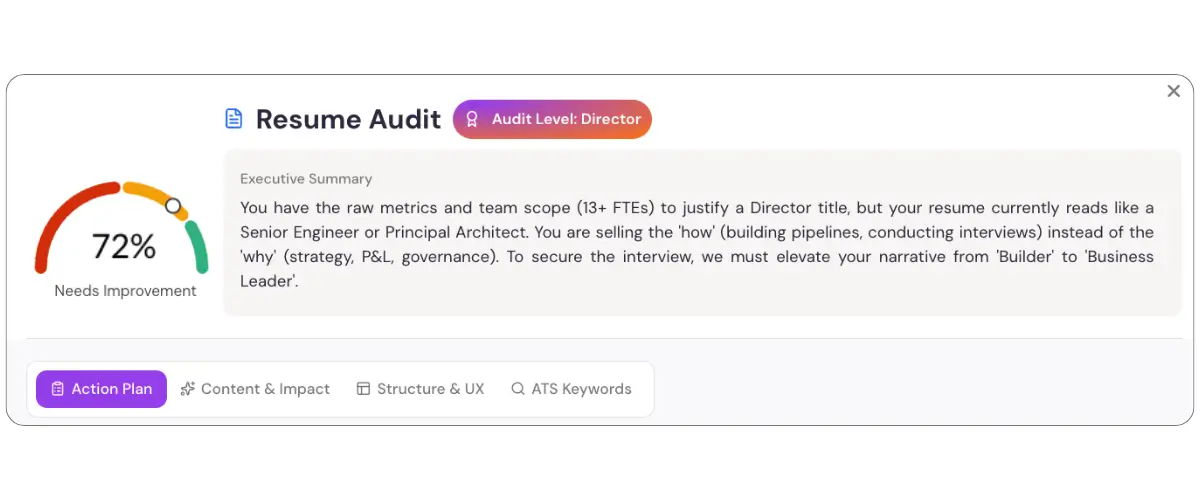
A frequent issue in the current "jobs recession" is that even top-performing employees fail to showcase their key skills properly. We often see candidates who believe their resume reflects a "Director" level of strategy, yet recruiters and hiring managers only see a "Manager" or "Coordinator."
To solve this, we trained the Seekario AI Resume Audit to bridge that gap. The AI Resume Audit analyzes your narrative to make sure your "Strategic Ownership" signals are louder than your "Task Execution" signals.
- Human-Recruiter Logic: The AI Resume Audit analyzes your resume just like a hiring manager, highlighting gaps in context and ensuring your professional level matches your career goals.
- Career Coach Insights: Beyond just identifying issues, the AI Resume Checker acts as a career coach, providing a comprehensive action plan on how to fix structural or narrative flaws.
Don't let a "mid-management" resume hold you back from your opportunities. Make sure your story reflects the high-level authority the 2026 market needs. Understand your resume level for free now. Try Seekario.


