Networking for Introverts: How to Job Search Without Cold Calls


Here's a stat that makes most introverts want to crawl under their desk: up to 80% of jobs are filled through networking. For the roughly 30-40% of professionals who identify as introverts, that number can feel like a prison sentence. If the path to your next job runs through crowded mixers, cold LinkedIn messages, and forced small talk with strangers, you might wonder whether you're just permanently disadvantaged.
You're not. The traditional image of networking — working a room, handing out business cards, calling people out of the blue — is only one version of how professional relationships get built. And honestly, it's not even the most effective version. The strategies that actually lead to job offers in 2026 favor depth over breadth, preparation over improvisation, and genuine connection over performance.
This guide is for introverts who want to build a professional network that leads to real opportunities — without pretending to be someone they're not.
Why Traditional Networking Advice Fails Introverts
Most networking advice was written by extroverts, for extroverts. "Just put yourself out there!" "Talk to everyone you meet!" "Follow up with a phone call!" These tips assume that social interaction energizes you rather than drains you. For introverts, that's not how it works.
Introversion isn't shyness or social anxiety (though those can overlap). It's about where you get your energy. Introverts tend to recharge through solitude and feel depleted after extended social interaction — especially with people they don't know well. Large networking events, cold outreach, and rapid-fire conversations with strangers hit every pressure point.
The result? Many introverts either avoid networking entirely or force themselves through uncomfortable events where they perform poorly because they're running on fumes. Neither approach leads to meaningful connections.
The good news is that the job search landscape has shifted dramatically. Remote work, digital communication, and LinkedIn have created networking channels that play directly to introverts' strengths: thoughtful written communication, one-on-one conversation, and deep listening.
8 Networking Strategies That Work for Introverts
1. Lead With Written Communication
Email, LinkedIn messages, and even thoughtful comments on social media posts are networking gold for introverts. Written communication lets you be deliberate, edit your thoughts, and engage on your own schedule — without the pressure of real-time conversation.
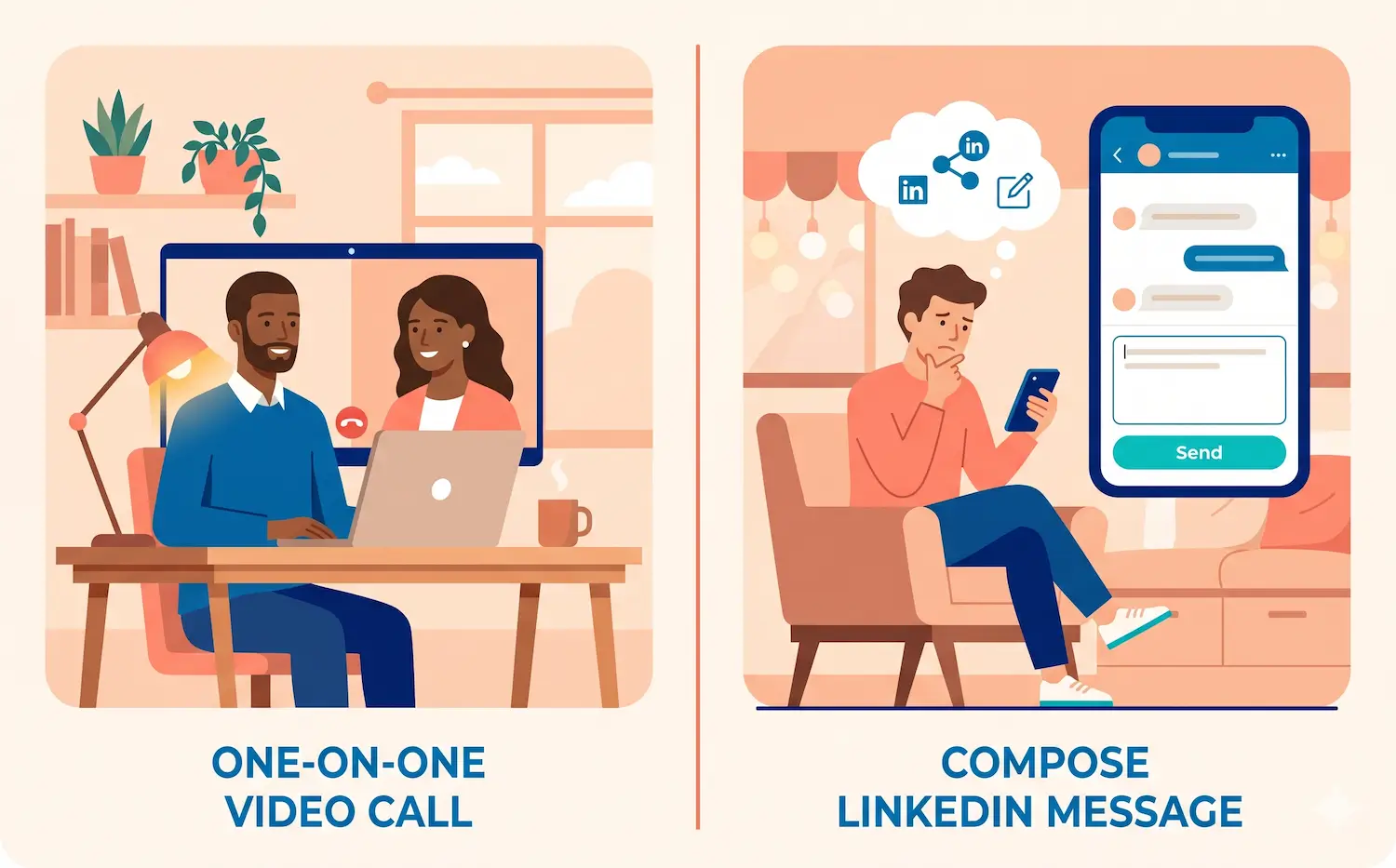
A well-crafted LinkedIn message can open doors that a networking event never would. Here's what works:
- Be specific about why you're reaching out. "I read your article on supply chain automation and had a question about the warehouse management system you described" beats "I'd love to pick your brain about supply chain" every time.
- Keep it short. Three to four sentences is plenty for an initial message.
- Make it easy to say yes. Instead of the vague "Can we chat sometime?" try "Would you have 15 minutes this Thursday or Friday for a quick call about [specific topic]?"
2. Use the One-on-One Informational Interview
Introverts typically thrive in one-on-one conversations, especially when they can prepare in advance. Informational interviews — short, informal conversations with professionals in your target field — are perfectly designed for this.
The format works because:
- You're asking questions, not selling yourself (which feels more natural for most introverts).
- You can research the person beforehand and come prepared with thoughtful questions.
- The conversation has a natural time limit (usually 20-30 minutes).
- Video calls or phone calls remove the physical energy drain of in-person meetings.
Aim for one to two informational interviews per week. Over a month, that's 4-8 meaningful new connections — more than most people make in a year of attending networking events.
3. Engage Online Before Meeting Offline
Before reaching out directly to someone, spend a few weeks engaging with their content. Like their LinkedIn posts. Leave a substantive comment. Share their article with your own take. This builds familiarity gradually, so when you eventually send a direct message, you're not a complete stranger.
This approach works because of the "mere exposure effect" — people develop a preference for things (and people) they encounter repeatedly. By the time you send that message, the person has already seen your name and knows you're thoughtfully engaged with their work.
4. Find Your Niche Communities
Large, general networking events are an introvert's worst nightmare. Smaller, topic-specific communities are the opposite. Look for:
- Online communities in your industry (Slack groups, Discord servers, specialized forums).
- Small meetups focused on a specific skill or topic (a Python user group vs. a general tech meetup).
- Professional associations that offer virtual events, discussion boards, or mentorship programs.
- Alumni networks from your university or past employers.
In niche communities, conversations happen naturally around shared interests. You don't need an elevator pitch — you just need to participate in discussions about topics you genuinely care about.
5. Become the Person Who Follows Up
Here's an introvert superpower most people overlook: follow-up. Most professionals are terrible at following up after meetings, events, or conversations. By being the person who sends a thoughtful message after a brief interaction — referencing something specific you discussed — you stand out immediately.
A follow-up doesn't have to be elaborate. Something like: "Great talking with you at the product management meetup yesterday. Your point about user research timelines really resonated — we've been dealing with the same challenge. Here's that article I mentioned: [link]."
This turns a one-time interaction into an ongoing connection, and it's entirely written — no phone call required.
6. Offer Value Before Asking for Anything
The best networkers — introverted or not — lead with generosity. Share an article that's relevant to someone's work. Introduce two people who could help each other. Offer feedback on a project. Congratulate someone on a milestone.
This approach removes the transactional feeling that makes networking uncomfortable for many introverts. You're not "networking" — you're just being helpful. The job opportunities tend to follow naturally.
Practical ways to offer value:
- Share job postings with people in your network who might be a fit.
- Write a LinkedIn recommendation for a former colleague.
- Answer questions in online communities where you have expertise.
- Send someone a relevant resource with a brief note explaining why you thought of them.
7. Set Realistic Networking Goals
Introverts burn out fast when they try to match extrovert-level networking activity. Instead of attending three events a week, set goals that align with your energy:
- Daily: Spend 10-15 minutes engaging on LinkedIn (like posts, leave one comment, respond to messages).
- Weekly: Send one to two personalized outreach messages or follow-ups.
- Monthly: Have one to two informational interviews or coffee chats.
This pace is sustainable and, over time, builds a network that's deeper and more engaged than what most people build through sporadic bursts of activity.
8. Use AI Tools to Reduce the Friction
One reason networking feels overwhelming is the sheer number of tasks involved: researching people, crafting messages, tracking conversations, following up at the right time. AI tools can handle much of this operational overhead, freeing your energy for the parts that actually matter — the human connection.
For example, Seekario's AI Networking tool can help you identify relevant opportunities and companies worth targeting, giving your networking efforts clear direction. And Seekario's Job Tracker lets you organize your applications, contacts, and follow-ups in one place — so nothing falls through the cracks during your search.
LinkedIn Networking: An Introvert's Best Platform
LinkedIn deserves its own section because it's arguably the most introvert-friendly networking tool ever created. Everything happens in writing. You can engage at your own pace. And the platform's algorithm rewards consistency over flash — steady, thoughtful participation over time beats occasional bursts of activity.
Optimize Your Profile First
Before you start reaching out to people, make sure your LinkedIn profile clearly communicates who you are and what you're looking for. A strong profile works as passive networking — people find *you*. Key elements:
- Headline: Go beyond your job title. Include your specialty and what you help with.
- About section: Write in first person. Share your professional story, key skills, and what kind of opportunities interest you.
- Experience: Use the same principles as your resume — measurable achievements, not just job duties.
If you want help optimizing your profile for job search, Seekario's AI LinkedIn Profile tool can analyze your profile and suggest specific improvements to increase your visibility to recruiters.
Engage Consistently
You don't need to post original content every day. Start with these low-effort, high-impact habits:
- Comment thoughtfully on 2-3 posts per day in your field. Not "Great post!" — add a perspective, a question, or a relevant experience.
- React to posts from people you want to connect with.
- Share articles with a brief sentence about why you found them valuable.
Over weeks, this builds visibility. People start recognizing your name. When you eventually send a connection request, they already feel like they know you.
Send Connection Requests With Context
Always include a note with your connection request. Reference something specific: a post they wrote, a mutual connection, a shared interest, or an event you both attended. This turns a cold connection into a warm one and dramatically increases your acceptance rate.
Networking at Events (When You Have To)
Sometimes you can't avoid in-person events — industry conferences, company mixers, job fairs. Here's how to handle them without burning out.
Arrive early. It's easier to talk to people when the room isn't packed. You can have calm, focused conversations before the energy ramps up.
Set a goal and an exit time. Tell yourself: "I'll have three real conversations and leave by 8:30." Having a defined endpoint reduces the open-ended anxiety of events.
Prepare two or three questions in advance. You don't need an elevator pitch. Instead, prepare thoughtful questions that get the other person talking. "What's the most interesting project you're working on right now?" works in almost any professional context.
Take breaks. Step outside for five minutes. Get water. Check your phone in the hallway. These micro-breaks help you recharge so you can be present in the conversations that matter.
Follow up the next day. This is where introverts really shine. Send a personalized LinkedIn message or email to anyone you had a meaningful conversation with. Most people won't bother — which means you'll be memorable.
Building Long-Term Relationships (Not Just Contacts)
The goal of networking isn't to collect connections — it's to build relationships with people who know your work, trust your judgment, and think of you when opportunities arise. This takes time, and it rewards the kind of consistent, thoughtful engagement that introverts do naturally.
Check in periodically. Every few months, send a message to key contacts. Share something relevant. Ask how their project is going. It doesn't have to be long.
Be a connector. When you meet two people who could help each other, introduce them. This positions you as someone who adds value to their network, not just takes from it.
Be patient. Strong professional relationships take months or years to develop. One informational interview today might lead to a job referral two years from now. That's normal, and it's how most career-changing connections actually work.
FAQ
How do introverts network effectively?
Introverts network best by leaning into their natural strengths: written communication, one-on-one conversations, deep listening, and thorough preparation. Focus on quality over quantity — a few meaningful connections built over time are more valuable than dozens of surface-level contacts from a networking event.
Is networking really necessary for a job search?
Yes. Research consistently shows that 70-80% of jobs are filled through networking and referrals. However, networking doesn't have to mean attending events or making cold calls. Online engagement, informational interviews, and participating in professional communities all count — and they're often more effective.
How can I network on LinkedIn as an introvert?
Start by optimizing your profile so it clearly communicates your skills and interests. Then engage consistently: comment on posts in your field, share relevant articles, and react to content from people you want to connect with. When sending connection requests, always include a personalized note. Aim for steady daily engagement rather than occasional bursts.
What if I get anxious about reaching out to strangers?
That's completely normal and not a weakness. Start with "warm" connections — alumni from your school, former colleagues, or people who've engaged with your content. Practice with lower-stakes outreach (commenting on posts, joining community discussions) before moving to direct messages. Most people are surprisingly open to helping if you approach them respectfully.
How many networking connections do I need to find a job?
There's no magic number, but research suggests that "weak ties" — people you know casually rather than close friends — are often the most valuable for job leads. Focus on building 15-20 genuine professional relationships in your target industry. That's far more effective than having 500+ LinkedIn connections you've never spoken to.
Your Strengths Are Your Strategy
Networking doesn't require you to become an extrovert. The job seekers who build the strongest networks are the ones who play to their strengths — and introverts have real advantages here. Thoughtful communication, deep listening, genuine curiosity, and the patience to build relationships over time are exactly what makes networking work.
Start small. Send one message this week. Leave one thoughtful comment on LinkedIn today. Book one informational interview this month. These small, consistent actions compound into a network that opens doors — on your terms.
And if you want to streamline the rest of your job search so you can focus your energy on the human side, Seekario's job search tools can handle the heavy lifting — from finding relevant roles to tracking your applications — so you can spend your limited social energy where it matters most.


