Technical Skills for Your Resume: 200+ Examples by Industry


Recruiters spend about six seconds scanning your resume. In those six seconds, your technical skills section acts as a quick-reference card — it tells them whether you have the tools, platforms, and competencies their role demands. Get it right, and you land in the "yes" pile. Get it wrong (or leave it vague), and your application disappears.
The challenge? Technical skills vary wildly across industries. A "must-have" in data engineering means nothing in healthcare, and vice versa. This guide organizes 200+ technical skills across 12 industries so you can find exactly what belongs on your resume — and flag the emerging skills that give you an edge in 2026.
Why Technical Skills Matter More Than Ever
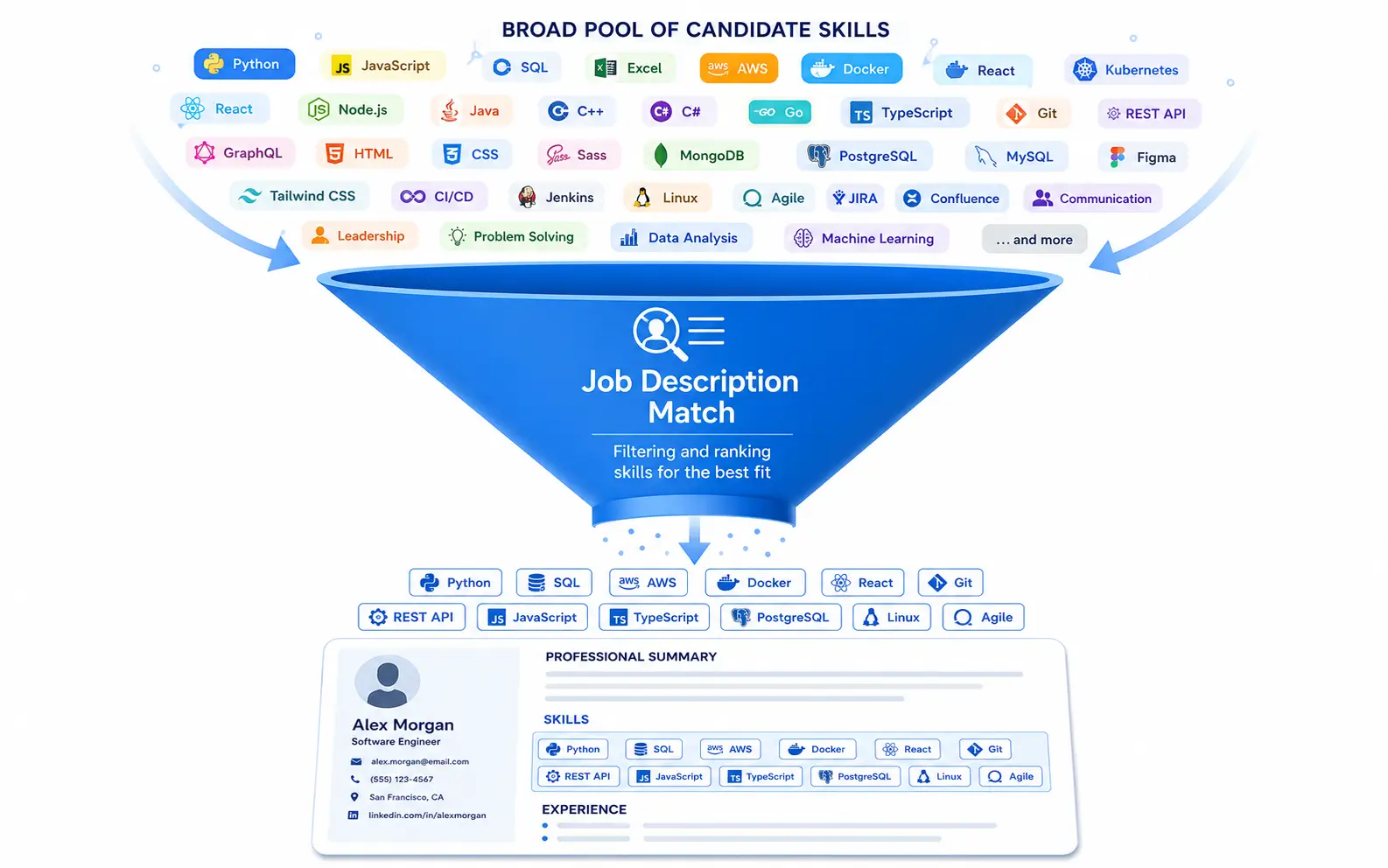
Technical skills serve two audiences: the ATS (applicant tracking system) that filters your resume before a human sees it, and the recruiter who scans what survives. Both are looking for specific keywords.
Here's what changed in 2026: AI-related hard skill mentions in job descriptions rose 30% between 2024 and 2025, according to Jobscan data. LinkedIn's Skills on the Rise 2026 report ranks AI literacy as the fastest-growing skill across all industries. Python appeared in nearly 18% of all job postings by end of 2025, up from 15% the year before. Cloud platform mentions (AWS, Azure, GCP) keep climbing year over year.
The bottom line: your technical skills section needs to be current, specific, and tailored to your target role. Generic entries like "computer skills" or "Microsoft Office" won't cut it anymore — unless the job posting explicitly asks for them.
If you're unsure which skills to highlight for a specific job, Seekario's AI Resume Tailor can match your resume to a job description and surface the exact technical keywords you're missing.
Software & IT
This is the broadest technical category, covering everything from front-end development to infrastructure management.
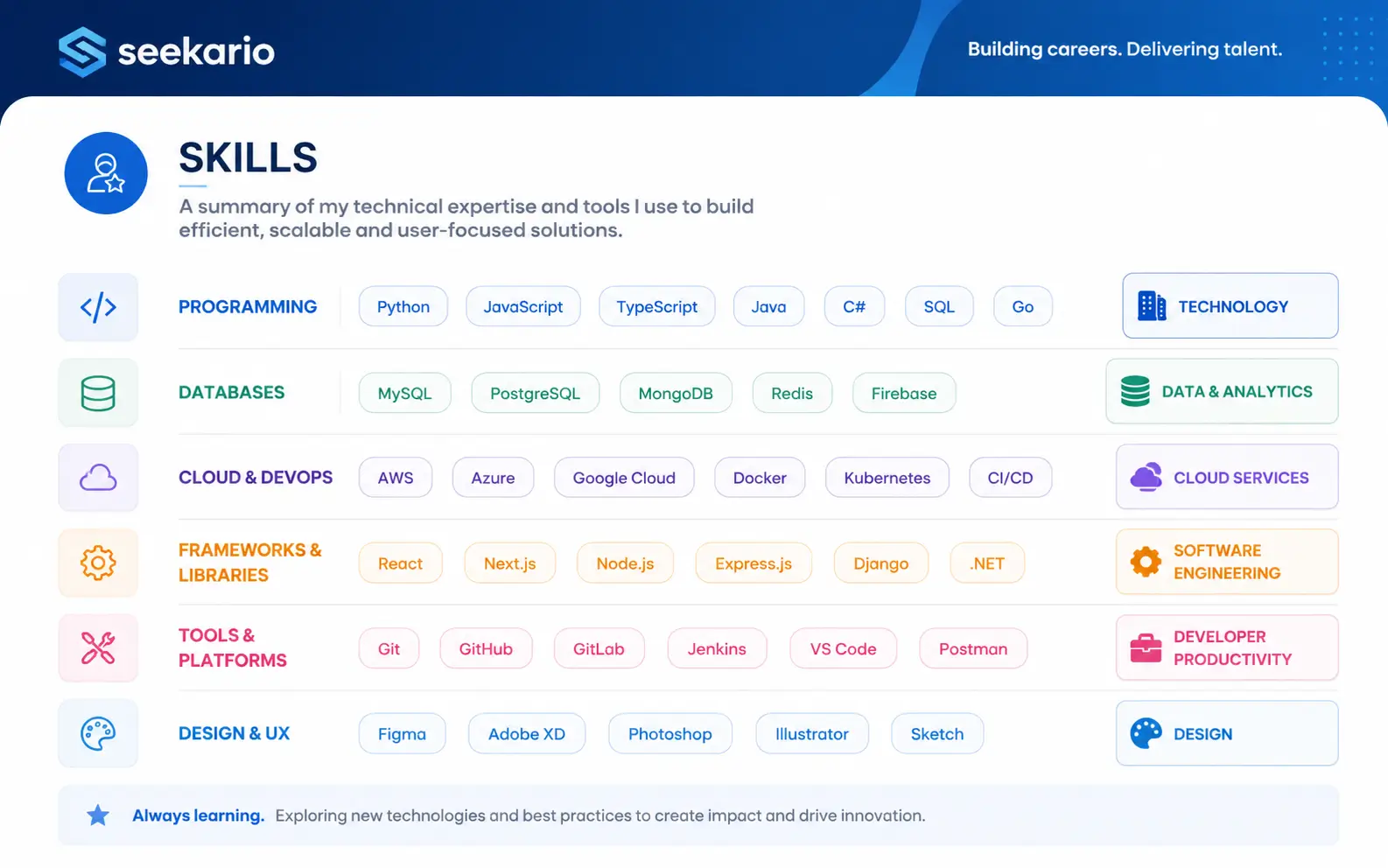
Programming Languages: Python, JavaScript, TypeScript, Java, C#, C++, Go, Rust, Ruby, Swift, Kotlin, PHP, R, Scala
Web Development: React, Angular, Vue.js, Next.js, Node.js, Django, Flask, Ruby on Rails, HTML5, CSS3, REST APIs, GraphQL
Databases: MySQL, PostgreSQL, MongoDB, Redis, Cassandra, DynamoDB, SQLite, Elasticsearch
DevOps & Cloud: AWS (EC2, S3, Lambda), Azure, Google Cloud Platform, Docker, Kubernetes, Terraform, Jenkins, GitHub Actions, CI/CD pipelines, Ansible
Cybersecurity: SIEM tools (Splunk, QRadar), penetration testing (Burp Suite, Metasploit), NIST/ISO 27001 frameworks, identity and access management, vulnerability assessment
Emerging: Agentic AI development, LLM fine-tuning, LangChain, prompt engineering, AI-assisted code review (GitHub Copilot), edge computing, WebAssembly
Data & Analytics
Data roles require a distinct blend of statistical knowledge and engineering capability.
Core Tools: SQL, Python, R, Jupyter Notebooks, Git/version control
Data Engineering: Apache Spark, Airflow, Kafka, dbt, Snowflake, Databricks, BigQuery, ETL/ELT pipeline design, data modeling
Data Visualization: Tableau, Power BI, Looker, D3.js, Matplotlib, Seaborn, Plotly
Machine Learning: TensorFlow, PyTorch, scikit-learn, XGBoost, Hugging Face, MLflow, feature engineering, model deployment
Statistics: A/B testing, regression analysis, hypothesis testing, Bayesian inference, time series analysis
Emerging: MLOps, vector databases (Pinecone, Weaviate), RAG architecture, LLM evaluation, data governance, synthetic data generation
Engineering (Mechanical, Civil, Electrical)
Engineering resumes need software proficiency paired with domain-specific technical knowledge.
CAD & Design: AutoCAD, SolidWorks, CATIA, Fusion 360, Revit, Inventor, Creo
Simulation & Analysis: MATLAB, Simulink, ANSYS, COMSOL, LabVIEW, SPICE
Project & Manufacturing: Six Sigma, Lean Manufacturing, GD&T, PLC programming, CNC programming, 3D printing/additive manufacturing
Electrical Specific: PCB design (Altium, KiCad), embedded systems (Arduino, Raspberry Pi), VHDL/Verilog, power systems analysis
Civil Specific: Structural analysis, BIM (Building Information Modeling), ArcGIS, environmental compliance, project scheduling (Primavera P6, MS Project)
Emerging: Digital twin technology, generative design, AI-assisted simulation, IoT integration, robotics process automation
Marketing & Digital Marketing
Marketing has become one of the most tool-heavy disciplines. Recruiters want to see platform fluency.
Analytics & SEO: Google Analytics 4, Google Search Console, SEMrush, Ahrefs, Moz, Screaming Frog, keyword research, technical SEO audits
Advertising: Google Ads, Meta Ads Manager, LinkedIn Campaign Manager, programmatic advertising, conversion tracking, retargeting strategies
Content & CRM: HubSpot, Salesforce, Marketo, Mailchimp, WordPress, Webflow, content management systems
Social Media: Buffer, Hootsuite, Sprout Social, TikTok Ads Manager, social listening tools, influencer management platforms
Design: Adobe Creative Suite (Photoshop, Illustrator, InDesign), Canva, Figma (for marketing assets)
Emerging: AI content optimization, marketing automation with AI agents, predictive analytics, privacy-first tracking (GA4 consent mode), generative AI for ad creative
Finance & Accounting
Finance roles increasingly blend traditional knowledge with data tools.
Core Software: Excel (advanced: VLOOKUP, pivot tables, macros, VBA), QuickBooks, Xero, SAP, Oracle ERP, NetSuite
Financial Analysis: Financial modeling, DCF analysis, Bloomberg Terminal, Capital IQ, FactSet, Monte Carlo simulation
Reporting Standards: GAAP, IFRS, SOX compliance, internal audit frameworks, tax preparation software (TurboTax, Lacerte)
Data & BI: SQL, Power BI, Tableau, Python for financial analysis, R for risk modeling
Emerging: ESG reporting and metrics, AI-powered fraud detection, robotic process automation (RPA), cryptocurrency/blockchain analysis, RegTech tools
Healthcare & Medical
Healthcare technical skills center on clinical systems, regulatory compliance, and patient care technology.
Clinical Systems: Epic EHR, Cerner, Meditech, eClinicalWorks, PACS (imaging), CPOE systems
Clinical Skills: Phlebotomy, IV administration, medication administration, patient assessment, vital signs monitoring, wound care
Lab & Diagnostics: Lab information systems (LIS), specimen processing, centrifuge operation, hematology analyzers, diagnostic imaging equipment
Regulatory: HIPAA compliance, FDA regulations, Joint Commission standards, clinical documentation improvement, ICD-10/CPT coding
Telehealth: Teladoc, Doxy.me, Zoom for Healthcare, remote patient monitoring devices
Emerging: AI-assisted diagnostics, precision medicine platforms, wearable health tech integration, genomic data analysis, digital therapeutics
Design & Creative
Creative roles require a portfolio, but your resume still needs to list tools for ATS parsing.
UI/UX Design: Figma, Sketch, Adobe XD, InVision, Axure, Balsamiq, Maze (user testing), Hotjar
Graphic Design: Adobe Photoshop, Illustrator, InDesign, After Effects, Lightroom, CorelDRAW
Motion & Video: Premiere Pro, Final Cut Pro, DaVinci Resolve, After Effects, Cinema 4D, Blender
Web Design: HTML/CSS, responsive design, accessibility standards (WCAG), design systems, Webflow, Framer
Emerging: AI-powered design tools (Midjourney, DALL-E, Runway ML), 3D/spatial design for AR/VR, variable fonts and fluid typography, design tokens
Project & Product Management
These roles bridge technical and business — your skills section should reflect both.
Project Management: Jira, Asana, Monday.com, Trello, Smartsheet, MS Project, Gantt charts, Agile/Scrum, Kanban, Waterfall, SAFe
Product Management: Amplitude, Mixpanel, Pendo, ProductBoard, Aha!, roadmap planning, A/B testing frameworks, user story mapping
Collaboration: Confluence, Notion, Miro, Slack workflows, Loom
Certifications to Note: PMP, PRINCE2, Certified Scrum Master (CSM), SAFe Agilist, AWS Cloud Practitioner
Emerging: AI product strategy, OKR automation tools, no-code/low-code platforms (Bubble, Retool), AI-enhanced project forecasting
Sales & Business Development
Modern sales is data-driven. Listing CRM-only skills is no longer enough.
CRM & Pipeline: Salesforce, HubSpot CRM, Pipedrive, Zoho CRM, Outreach, SalesLoft, Gong
Analytics: Sales forecasting tools, territory mapping, pipeline analytics, deal scoring, revenue intelligence platforms
Enablement: Seismic, Highspot, LinkedIn Sales Navigator, ZoomInfo, Clearbit, proposal software (PandaDoc, Proposify)
Emerging: AI-powered lead scoring, conversational intelligence platforms, sales automation agents, intent data platforms (Bombora, 6sense)
Education & Training
EdTech skills now carry weight equal to classroom management credentials.
LMS & Platforms: Canvas, Blackboard, Moodle, Google Classroom, Schoology, Brightspace
Instructional Design: Articulate 360, Adobe Captivate, Camtasia, H5P, SCORM/xAPI standards
Assessment: Kahoot, Quizlet, Turnitin, Gradescope, rubric design, formative assessment tools
Emerging: AI tutoring systems, adaptive learning platforms, VR/AR learning environments, learning analytics dashboards
Legal
Legal professionals benefit from listing technology skills alongside substantive knowledge.
Research & Practice: Westlaw, LexisNexis, Bloomberg Law, case management systems (Clio, MyCase), e-discovery (Relativity, Nuix)
Documentation: Contract lifecycle management (CLM) tools, document automation (HotDocs, Contract Express), redlining and markup tools
Compliance: RegTech platforms, data privacy frameworks (GDPR, CCPA), risk assessment tools
Emerging: AI contract review (Kira, LawGeex), legal analytics, predictive case outcome tools, AI-assisted due diligence
Human Resources
HR has shifted from purely administrative to data-driven and strategic.
HRIS & ATS: Workday, BambooHR, SAP SuccessFactors, Greenhouse, Lever, iCIMS, UKG
Compensation & Analytics: PayScale, Radford, compensation modeling, people analytics, workforce planning tools, Power BI
L&D: LinkedIn Learning administration, LMS management, skills gap analysis, succession planning tools
Emerging: AI-powered candidate screening, DEI analytics platforms, employee experience (EX) measurement tools, predictive attrition modeling
How to Prioritize Which Skills to List
Having 200+ options is useful for reference, but your resume should only feature 8–15 technical skills. Here's how to choose:
- Start with the job description. Highlight every tool, platform, language, or framework mentioned. These are your priority keywords.
- Separate required from preferred. Required skills go on your resume if you have them — no exceptions. Preferred skills give you a competitive edge.
- Lead with your strongest match. Put the skills that most closely align with the role first in your skills section. Recruiters read left to right, top to bottom.
- Add one or two emerging skills. If you have genuine experience with an emerging skill (like agentic AI or MLOps), include it. It signals that you stay current — a quality every hiring manager values.
- Remove anything outdated. Skills like "Microsoft Word" or "typing speed" waste space unless the job specifically requests them. Replace them with tools that demonstrate deeper expertise.
For a faster approach, Seekario's AI Resume Builder analyzes your experience and generates a technical skills section tailored to your target industry, including emerging skills you might not think to add.
Common Mistakes with Technical Skills on Resumes
Listing skills you can't back up. If an interviewer asks you to whiteboard a SQL query and you freeze, that "Advanced SQL" claim hurts more than it helps. Only list skills you can demonstrate.
Dumping every skill into one block. A wall of 40 keywords is hard to scan. Group skills by category (Languages, Tools, Frameworks) so recruiters find what they need fast.
Ignoring skill levels. For some fields (especially languages and design tools), indicating proficiency matters. "Python (advanced)" and "R (working knowledge)" give recruiters a clearer picture than listing both without context.
Skipping context. Skills listed in isolation carry less weight than skills shown in action. Mirror your top technical skills in your work experience bullets: "Built ETL pipelines using Apache Airflow and dbt, reducing data processing time by 40%."
Not sure if your technical skills section is hitting the mark? Seekario's AI Resume Checker scores your resume and flags gaps in your skills section relative to your target role.
Frequently Asked Questions
What are technical skills on a resume?
Technical skills are specific, learned abilities related to tools, software, programming languages, systems, or methodologies required to perform a job. They differ from soft skills (like communication or leadership) because they can be tested, certified, or demonstrated through work output. Examples include Python programming, Tableau visualization, Epic EHR management, or financial modeling in Excel.
How many technical skills should I put on my resume?
Aim for 8–15, organized by category. The exact number depends on your industry and experience level. A software engineer might list 12–15 across languages, frameworks, and tools. A project manager might list 8–10 covering methodologies, platforms, and certifications. Quality and relevance beat quantity every time.
Should I list technical skills in a separate section or in my work experience?
Both. Create a dedicated "Technical Skills" or "Skills" section near the top of your resume for ATS scanning, then reinforce your most important skills within your work experience bullets. This approach satisfies both the algorithm and the human reader.
How do I list technical skills I'm still learning?
If you've completed coursework, earned a certification, or built a project using the skill, include it. You can note proficiency levels — "Python (intermediate)" or "Tableau (certification in progress)" — to set honest expectations. Avoid listing skills you've only read about.
What emerging technical skills should I add to my resume in 2026?
The highest-impact emerging skills vary by field, but across industries, AI literacy tops the list. Specific skills gaining traction include prompt engineering, AI workflow automation, agentic AI development, MLOps, ESG reporting, digital twin technology, and AI-assisted design tools. Only add these if you have hands-on experience — recruiters will ask.
Build a Targeted Technical Skills Section
Your technical skills section is one of the first things both ATS systems and recruiters evaluate. The 200+ skills in this guide give you a solid starting point, but the real advantage comes from tailoring: matching your skills to each specific job description, leading with what matters most, and flagging emerging capabilities that set you apart.
For a comprehensive breakdown of every resume section — not just skills — check out our Complete Guide to Resume Sections.
Ready to build a resume with a technical skills section that actually matches your target role? Seekario's AI Resume Builder generates an industry-specific skills section based on your experience and the jobs you're targeting — including emerging 2026 skills that most candidates miss. Try it free →