Do Hiring Managers Actually Read Cover Letters?

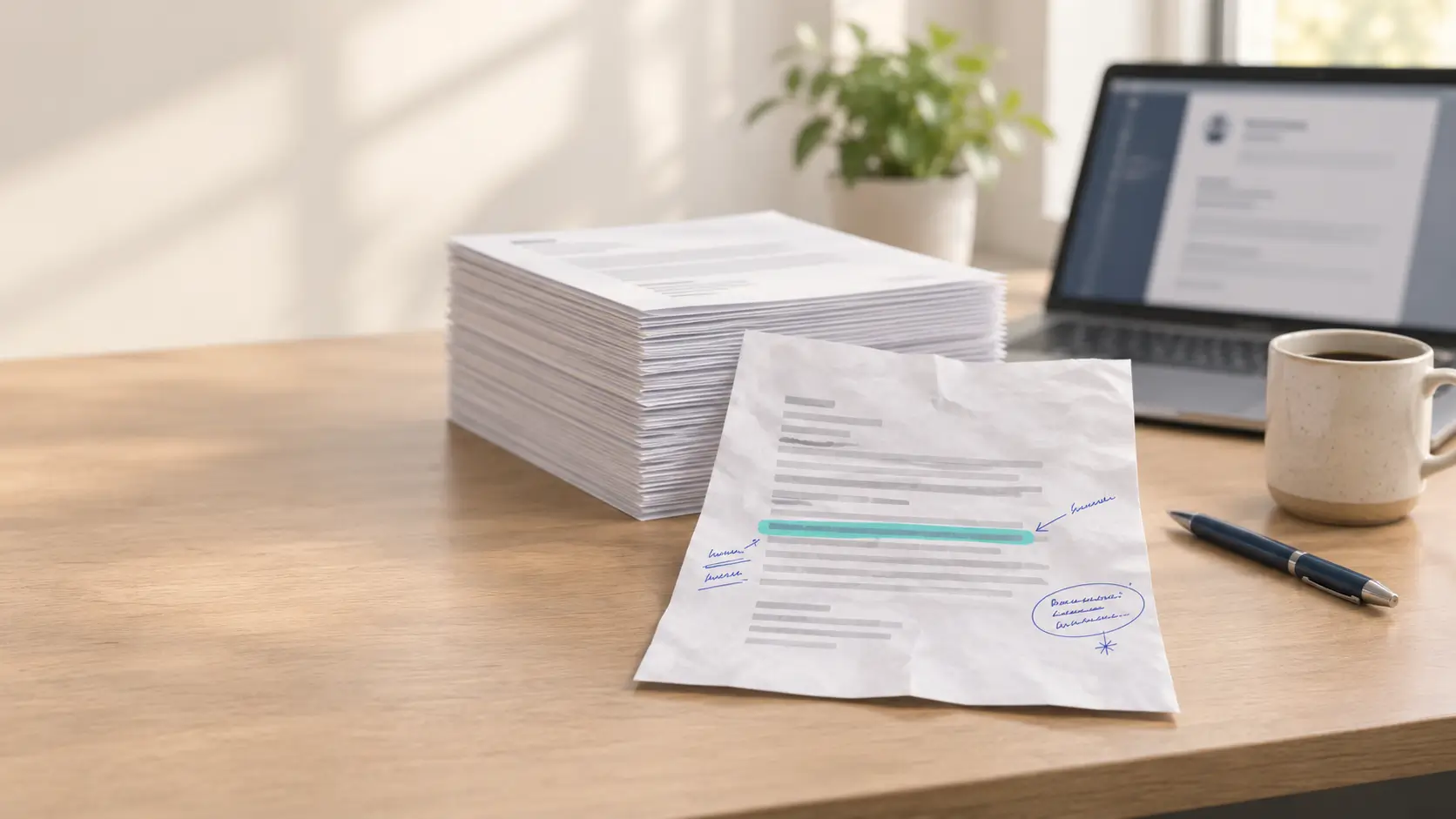
Cover letters may matter less than the proof candidates bring to the table. Insights from hiring experts reveal when résumés, work samples, technical evidence, and honest details carry more weight. Here are the signals that can help an application stand out—and the ones that may be ignored.
For years, the cover letter did one simple job: it proved you cared enough to write something. That signal has collapsed. Generative AI lets anyone produce a fluent, polite, keyword-matched letter in seconds, so hiring managers now open stack after stack of letters that sound the same.
So do they still read them? We asked 14 founders, executives and hiring leaders across advertising, marketing agencies, startups, manufacturing, solar, IT services, software and law. We wanted to know when they read a cover letter, what keeps them reading past the first line, what makes them stop, and whether AI has changed their approach in the last two years.
Their answers range from "I always read cover letters" to "I stopped reading them years ago." But nearly all of them agree on one thing: polish no longer earns attention. Specifics do.
Below are their responses in their own words. After that, we pull out the patterns, turn them into a checklist for your next application, and show how Seekario's AI Cover Letter Generator can handle the heavy lifting while you add the details only you can.
What 14 hiring experts told us
Responses appear as submitted.
Resolve Resume Questions With Facts
As a behavioral and business acumen analyst, I have spent many years analyzing people on paper.
Cover letters will be looked at, but not before the resume. If your resume makes me wonder something about you, i.e., switching careers or 18 months without work, I will look at your cover letter. I spend no more than 10 seconds on most cover letters. If I cannot tell within the first sentence that this person wrote it for me, it's over. If the letter could apply to 50 different agencies with the name changed, it's over. If it can answer the question I have from your resume, I will read it to the end, even if it's 4:45 p.m. on a Friday and I have 30 open candidates.
Things have shifted over the past two years. With AI, almost every cover letter is well written. If a cover letter is written well, it tells me nothing. Nine out of 10 cover letters are well written now. I skip to a sentence that may show they know something we wouldn't otherwise know about. Perhaps they worked on a campaign or made a mistake and told me about it. If you're switching careers, please mention something from your previous job. Also, if someone can mention a number, I will read that letter to the end. A poorly written cover letter with one fact I can use is better than a well-written cover letter.
— Cyrus Kennedy, Chairman & Acting CEO, The Ad Firm
Favor Direct Credential Notes
As a career app builder, I screen every application for my own roles myself as well as guide candidates in their job hunt journey.
I do read the cover letter if it is available but only after I have seen the resume (and like it too), and usually only the first two lines, if its standard template, then it does not help much. A good cover letter for me is something which is written like a direct email, and is very specific to showcase why the candidate can perform on the role and how their credentials supports it.
Though, I have seen lately companies using newer AI enabled platforms don't even ask for cover letter at all, not even optional. I have also seen in Europe cover letter still holds more weight and is always read (esp. for non-tech roles).
A decent letter used to signal effort. Now anyone can produce a fluent one in seconds, so fluency tells nothing and specificity is the only thing left that does.
— Nishant Modi, Founder & CEO, Careerkit
Demand Verifiable Context
I do read cover letters but they only factor into my screening if they tell me something the resume does not. The first few lines usually decide whether I keep going.
I want to understand why the candidate fits the position or GET CONTEXT about something in their work history that needs explanation. A specific accomplishment, relevant experience or clear connection to the role will keep me reading.
If the opening is generic (repeats the resume or could be sent to 20 other employers without changing a word), I usually stop.
A candidate we considered for a content writer position had several years in communications but their resume did not clearly show the SEO writing experience we needed. Their cover letter explained that they had written search-focused service pages, worked from keyword briefs and updated older articles after reviewing ranking and traffic data. They also linked to work samples that supported those claims which gave us enough reason to continue the conversation.
My view has changed over the last two years because AI can produce polished application writing very easily. I now put less weight on how impressive a letter sounds and more on specific responsibilities, decisions and results I can verify during an interview. Generic praise, repeated resume points and unsupported claims are usually where I stop reading.
In a stack of hundreds of applications, a cover letter isn't creative writing; it's a filter separating those who understand the core problem from those just casting a wide net.
— Jimi Gibson, VP of Brand Communication, Thrive Internet Marketing Agency
Let Résumés Settle First
I rarely start with the cover letter. I review the resume first to see whether the candidate has the experience we actually need.
If two applicants look fairly similar, that is where the letter becomes useful. I am looking for evidence that someone understands the position. A sentence connecting a past project to one of our stated responsibilities can tell me more than a paragraph about being passionate, hardworking or excited.
I usually stop if the opening spends several lines on general enthusiasm without giving me anything that helps separate that candidate from the rest of the applicant pool.
During one account management hire, an applicant's CV showed several years of client-facing work but it was difficult to tell how independently she operated. The letter filled in that missing piece. She described managing several active accounts, coordinating deliverables across internal departments and taking responsibility for client conversations after campaign performance fell short of expectations.
That gave us specific areas to question during the interview including how she prioritized competing requests and handled difficult client discussions. Her interview answers matched what she had described and she advanced beyond the initial screening.
Over the years, I've narrowed what I look for in a cover letter to three things: what the candidate actually did, what decisions they were responsible for and what came from their work. AI can produce the wording but it CANNOT REPLACE THE SUBSTANCE I need to assess someone's actual experience.
— Aaron Whittaker, VP of Demand Generation & Marketing, Thrive Internet Marketing Agency
Prize Imperfect Original Insight
Cover letters still get read here, just not from the top. I skip the opening paragraph because it has become the same sentence about our mission in 200 different fonts. The middle is where you find out whether the candidate noticed anything on their own.
We keep our headcount around 60. That means I see a fair share of applications myself. What keeps me reading is a small, slightly wrong guess about our work, like someone assuming we write cheques when all we do is make introductions. It is wrong but it is theirs.
2 years ago I would have binned that letter for the error. Now a wrong detail is often the only proof a person wrote it. I disagree with the advice to research the company until the letter sounds perfect.
— Sahil Agrawal, Founder, Head of Marketing, Qubit Capital
Let Product Insight Tip Scales
I do read cover letters but only when the resume gives me a reason to.
If your work history looks like a fit, the cover letter is what tips the scales. What keeps me reading is simple: a genuine reason you want this role, not just any role. One candidate opened by pointing out a specific flaw in our product page copy and explaining how she'd approach it differently. I read every word. She had an interview that week.
What stops me immediately is the template opener, "I am writing to express my interest in..." I've seen more of these lately, and honestly, it's no surprise. AI has made generic effortless to produce at scale. But that's also what makes a thoughtful, specific letter so rare right now and so memorable.
If your cover letter could've been sent to any company, chances are it won't be read by this one.
— Sina He, Co-founder, Ubackdrop
Prioritize Work Proof Over Letters
Cover letters are not a waste of time in our hiring process, but I find myself more interested in the substance of the work samples, speed of CAD portfolio delivery, and the ability to solve operational problems. It is rare to find someone in custom cabinetry, manufacturing design, and direct-to-consumer sales who can demonstrate competency in running zero-error job site orders, overcoming factory lead-time issues, or other operational pain points. Candidates who use generic corporate language or AI-assisted fluff to express enthusiasm for the position without demonstrating specific achievements lose me at the first paragraph. Over the past 24 months, as AI tools have inundated the market with similarly worded cover letters, they ceased to be a useful screening mechanism, and we started focusing on evaluating applicants on technical competencies and actual work samples.
Instead of traditional cover letters, we screen candidates based on their responses to situational questions included in the application form. Depending on the position in design, procurement, or logistics, we ask them to describe the approach to a hypothetical situation at length. The best applications include the specifics of how they would address the issue in the context of our operations. We look for candidates who can identify areas of responsibility and hold themselves accountable in front of stakeholders rather than reiterating generic competency words, fluffing up the letter. If they seek to pique our interest, replace the conventional begging-for-mercy opening paragraph with hard results, unique value propositions, and words of domain-specific language relating to the challenges of your area of responsibility.
— Josh Qian, COO and Co-Founder, LINQ Kitchen formerly BestOnlineCabinets
Abandon Letters for Authentic Signals
Honestly? I stopped reading them years ago. That decision has only been solidified in the last 2 years with the progression of AI.
Here's what a cover letter was ever good for: it showed effort, real interest, and whether someone could write. That was the signal. All three died the day ChatGPT could produce a polished, perfectly tailored letter in ten seconds. Now every letter I open sounds the same. Fluent, keyword-matched, "deeply aligned with your mission," and telling me nothing about the actual person. I'm not reading the candidate anymore. I'm reading a language model. Why would anyone screen on that?
So I skip them. What I look at instead is what someone has actually done: the outcomes on their CV, a work sample if the role calls for one, and one or two screening questions specific to the job and genuinely hard to fake, the kind you can only answer well if you've really done the work. Then a short conversation. That gives me more signal in fifteen minutes than a cover letter ever did.
Where I'll push back on my own take: for someone very junior or changing careers, with no track record to read, a genuine cover letter used to be the one place they could make their case. I have real sympathy for that. But even there, AI has muddied the water so badly that I now trust a two-line, obviously human note far more than a full letter. A real voice beats polish now.
The cover letter isn't dying. It's already gone. Most of us just haven't updated the form yet.
— Ebony James, Co-Founder & CEO, Atlast
Test Applicants With Code Words
I always read cover letters, and for me, a good one makes a candidate stand out immediately, as long as it's not obvious copy-paste. The value of a cover letter is that two or three lines can be enough to convince me to bring someone in and flag them as promising.
We also use a trick where the job posting asks candidates to include a specific code word or phrase in their cover letter. It tells us right away whether they actually read the posting all the way through. So for me, a well-written letter is a strong marker of a good candidate.
What I look for is short and to the point: why me, why you, what have you achieved, and anything genuinely interesting about them. The most valuable version is one that goes straight to identifying problems in our business they think they could fix.
Has this changed in the last two years? AI has automated a lot of hiring, but I don't see a problem with that as long as it's not AI slop. If a candidate used AI to write their cover letter but it actually has everything I need in it, great. If they dumped AI slop on me instead, that's a problem they created for themselves, not me.
— Nick Anisimov, Founder, FirstHR
Use Specificity as a Tiebreaker
I read them, but only after the resume has already cleared. The cover letter never gets someone in the door for me. It settles a decision I'm already 70 percent to.
What keeps me reading past the first line is specificity about my situation. If someone opens by naming the actual problem I'm hiring against, a workflow that's breaking, a function I clearly just started building out, I'll read every word. What stops me cold is any version of "I'm passionate about your mission". I've hired across tech, marketing, and operations roles for 15 years and I've never once had a passion paragraph change my mind about a candidate.
The last two years made this sharper, not softer. Generated letters are fluent, polite, and interchangeable, so fluency stopped signaling effort to me. Now I put more weight on a slightly awkward sentence that proves someone looked at what we do than on a clean one that could be sent to any company.
Speed matters too. When my placements are running in days, not weeks, nobody is sitting with a stack of essays. So I treat the letter as a tiebreaker document. Write it assuming I'll read three sentences, and make those three sentences about the job rather than about you.
— Val Narodetsky, CEO, Odesa
Reward Honest Cultural Fit
I've hired across multiple departments - operations, sales, installation crews, office staff. Cover letters do get read, but not how most people think.
What actually makes me keep reading is when someone demonstrates they understand the nature of the work, not just the title. When I was building out my operations team, one candidate wrote two sentences explaining why they wanted to work somewhere that does things the right way rather than the fast way. That told me more about cultural fit than their entire resume.
What makes me stop immediately is generic language that could apply to any company. If you didn't bother to understand what we actually do before writing to me, why would I believe you'll pay attention to detail on the job? In solar installation especially, I need people who sweat the details - a sloppy cover letter is a direct preview of sloppy work.
The biggest shift I've noticed recently is that volume has made letters feel performative. So now I use them differently - not as a primary screen, but as a tiebreaker when two candidates look identical on paper. The one who wrote something specific and honest about why they want this role gets the call first.
— Ernie Bussell, CEO, Your Home Solar
Prove Human Thought and Values
I'm CEO and co-founder of Netsurit, a 300+ person IT services company across North America, South Africa, and Europe, so hiring is a culture decision for me, not just a skills screen. I do not read every cover letter first; I usually look for role fit, evidence of outcomes, and values alignment before spending time on the letter.
What makes me read one all the way through is specificity. If someone says, "Your people-first culture and Dreams Program are why I'm applying, and here's how I've helped teams grow while serving clients," I keep reading.
What makes me stop is a generic letter that could go to any MSP, bank, or software company. "I am a motivated self-starter seeking a dynamic opportunity" tells me nothing.
This has changed in the last two years because generic writing has become even easier to produce. A good cover letter now has to prove human thought: why us, why this role, and what real problem you can help solve.
— Orrin Klopper, CEO, Netsurit
Replace Narratives With Technical Evidence
In our initial screening, we ignore cover letters as they have been fully supplanted by direct work proof. In the past two years, the growth of generative AI tools has turned traditional application narratives into products and rendered cover letters useless as an indicator of a candidate's real communication skills and intentions. Instead of reviewing written narratives that could have been produced in seconds, we base our screening decisions on objective technical portfolios, public repositories of code, marketing campaigns, and evidence of effort.
The only time cover letters come in handy is at the end of the recruitment process when we need to evaluate the candidate's style of communication contextually. For the cover letter to keep me engaged and reading it until the end, it needs to move away from describing the resume and discussing the situation at hand instead. A description of saving a difficult project, solving an infrastructure problem, or overcoming cultural differences would cover all bases and work. The letter should sound like a genuine professional correspondence reflecting the candidate's awareness of the needs of engineers.
At the same time, the simplest way to stop reading is to encounter buzzwords or an obviously automated text. Statements like 'I am a highly motivated self-starter' or repetition of the job description would not cut it. When technical skills and real communication are the key, having the proof of what was created is much more important than well-written pieces that follow a template.
— Amit Agrawal, Founder & COO, Developers.dev
Require Precise Legal Relevance
As managing attorney at a firm handling securities arbitrations and FMLA claims nationwide, I review applications from candidates who must grasp detailed procedural rules like those in the FINRA Discovery Guide or eligibility criteria for leave protections.
I read cover letters that open by linking a candidate's background directly to one of our matters, such as explaining how they analyzed account statements and trade confirmations in past cases or handled interference claims under attendance policies. That connection keeps me going past the first line.
Generic restatements of a resume or broad interest in litigation make me set it aside right away. Nothing has changed that approach in recent years, since our work still demands precise understanding of statutes like the Securities Exchange Act or corporate oppression claims.
One example that stood out involved a candidate who referenced the specific steps in selecting an arbitration panel from public and industry lists, showing they could step into ongoing subprime-related disputes.
— Alan L. Frank, Attorney, Alan L. Frank Law Associates, P.C
What this means for your next cover letter
The short answer: most hiring managers still read cover letters, but late, fast and only for what your resume can't say. Fourteen experts, very different industries, and the same patterns kept coming up.
1. Your resume is read first. The letter answers the questions it raises. Nearly every expert opens the resume before the letter. Cyrus Kennedy only turns to the letter when the resume makes him wonder something, such as a career switch or a gap. Jimi Gibson and Aaron Whittaker both describe letters that filled a hole the CV left open. Use your letter to explain the thing a reader might trip over.
2. You have one to three sentences. Kennedy gives most letters 10 seconds. Nishant Modi reads the first two lines. Val Narodetsky says to assume he'll read three sentences. Put your strongest, most specific point first.
3. Fluency is no longer a signal. Specificity is. Because AI writes polished letters for everyone, good writing alone now tells a reader nothing. Several experts say they'd rather read a slightly awkward sentence that proves you looked at their company than a clean one that could go anywhere.
4. Numbers and verifiable facts win. Kennedy will read to the end if he sees a number. Whittaker looks for three things: what you did, what you decided and what came of it. Gibson wants claims he can check in an interview, ideally backed by work samples.
5. Name their problem, not your passion. The letters these experts remember pointed at something real: a flaw in product page copy, a workflow that's breaking, a specific legal matter. Not one expert said enthusiasm alone changed their mind.
6. Read the posting all the way through. Nick Anisimov hides a code word in his job ads to see who did. Mirror the role's stated responsibilities and follow any instructions exactly.
7. Some employers skip the letter entirely. Josh Qian, Ebony James and Amit Agrawal screen on work samples, portfolios and situational questions instead. The same specifics you'd put in a letter should also show up in your resume, your samples and your screening answers.
8. Context changes the rules. Modi notes letters still carry more weight in Europe, especially for non-tech roles. Specialist fields like law expect precise, domain-level detail. Career changers and junior candidates have the most to gain from a genuine, human letter.
How to write a letter that passes the 10-second test with Seekario
Most of these experts aren't against AI itself. They're against generic AI. As Nick Anisimov puts it, if AI helped write your letter and it has everything he needs, great. The problem is a letter built from a blank prompt, with nothing from your real experience or their real job.
Seekario is an AI job search platform built around how recruiters and applicant tracking systems review applications. Its AI Cover Letter Generator writes each letter from two inputs: your resume and the specific job you're applying for. That gives you a tailored first draft in minutes, so your time goes into the details hiring managers actually look for.
Here's a workflow that follows what the experts told us:
- Find the questions your resume raises. Run your resume against the job with Seekario's AI Role Assessment or AI Resume Checker. Any gap or mismatch it surfaces is a question a hiring manager will ask, and your letter's job is to answer it.
- Tailor your resume first. Since the resume is read before the letter, use the AI Resume Tailor to match it to the role.
- Generate a tailored draft. Paste the job description into the AI Cover Letter Generator. Because it works from your resume and that posting, the draft starts from your experience rather than stock phrases.
- Make it unmistakably yours. Edit the draft against the experts' checklist:
- Open with their problem or your strongest result, not "I am writing to express my interest."
- Add at least one number.
- Include one concrete story: a decision you made and what came of it.
- Cut any line that could be sent to another company.
- Include any code word or instruction from the posting.
- Keep it short enough to read in three sentences, with the rest as backup.
- Prepare to prove it. Experts like Jimi Gibson and Aaron Whittaker test letter claims in the interview. Practise with the AI Interview Assistant, which generates role-specific questions and gives feedback on your answers.
- Track every application. Keep versions and follow-ups in Seekario's free Application Tracker.
Applying for government, university or corporate roles that ask for selection criteria? Seekario's KSC Response Writer drafts STAR-method responses, so the same evidence-first approach carries through.
You can try Seekario on its free plan, which includes 5 AI credits for premium tools like the cover letter generator.
The bottom line
Do hiring managers actually read cover letters? Many do, but not the way candidates imagine. They read after the resume, they skim the first few lines, and they stop the moment a letter sounds like it could have gone to anyone. A few have stopped reading them altogether and look straight at your work.
That changes what a good letter is for. It isn't there to show you can write; AI made that free. It's there to answer the one question your resume raises, prove you understand their problem, and give them a fact worth checking in the interview. A short, specific, slightly imperfect letter in your own voice now beats a polished one that says nothing.
Let AI handle the structure and tailoring, and spend your effort on the specifics only you can add. Start your next cover letter with Seekario's AI Cover Letter Generator, then make it unmistakably yours.


