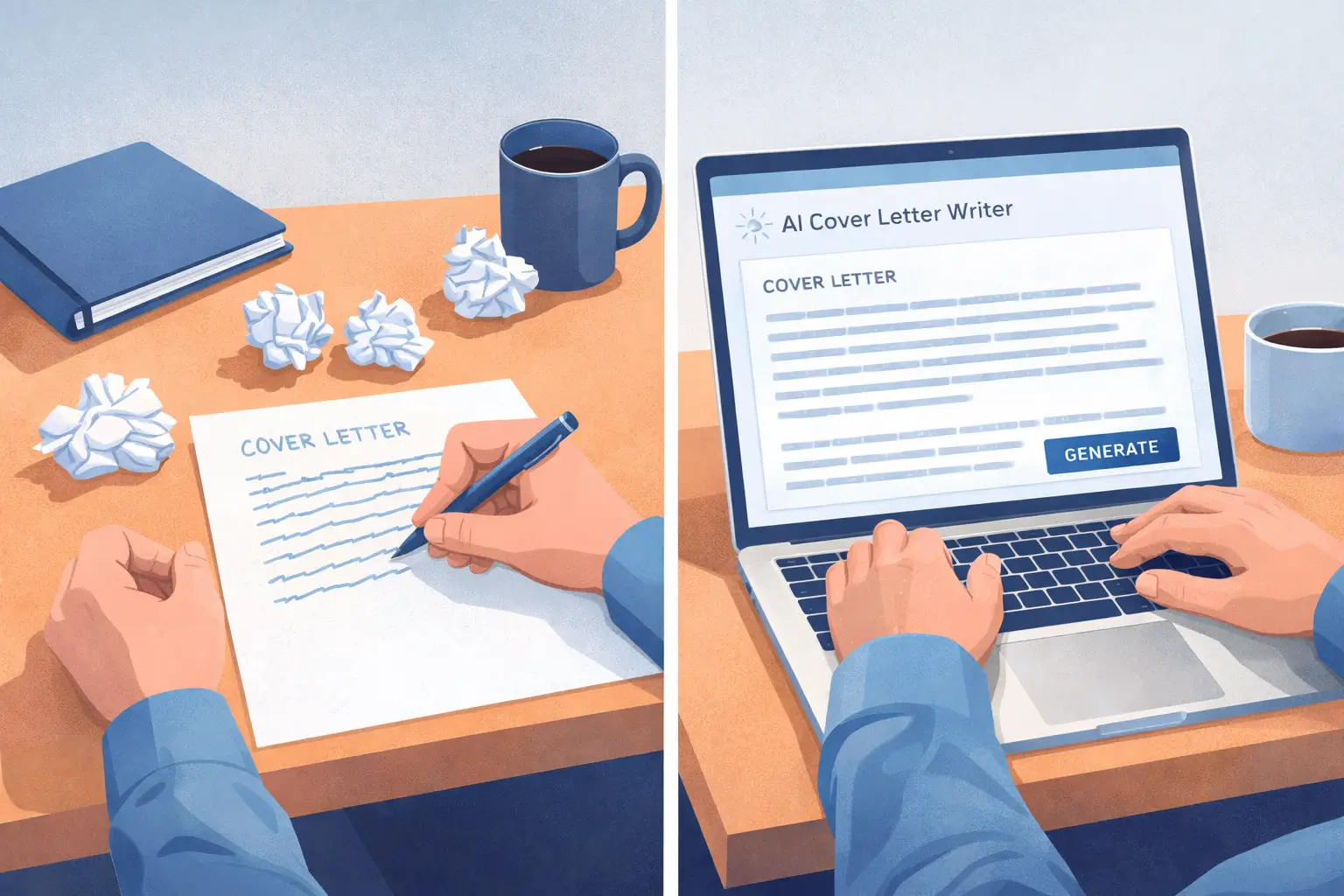
How to Write a Cover Letter When You Have No Experience


You found a job posting that excites you. The role looks like a perfect fit. Then you read the application requirements: "Please submit a cover letter." And your stomach drops — because you have zero work experience to write about.
Here's the thing most first-time applicants don't realize: a cover letter with no experience isn't about apologizing for what you lack. It's about showing a hiring manager what you bring — your skills, your energy, your ability to learn fast — even if you haven't held a formal job yet.
According to a 2026 survey by Resume Genius, 94% of hiring managers say cover letters influence their interview decisions, and 72% expect one even when it's listed as optional. For entry-level candidates, a well-written cover letter can be the difference between getting overlooked and getting an interview.
This guide walks you through exactly how to write one — step by step, with examples.
Why Your Cover Letter Matters More Without Experience
When you have five years of relevant work history, your resume does most of the heavy lifting. Hiring managers can scan your job titles, companies, and bullet points and quickly gauge your fit.
But when your resume is light on experience — maybe you're a recent graduate, a career changer, or someone entering the workforce for the first time — your cover letter becomes the main stage. It's where you show:
- Why you want this specific role (not just any job)
- What transferable skills you already have from school, volunteering, personal projects, or extracurriculars
- How quickly you can learn and contribute to the team
Recruiters filling entry-level roles aren't expecting five years of industry experience. They're looking for candidates who are self-aware, eager to grow, and genuinely interested in the position. Your cover letter is where you prove that.
Step 1: Research the Company and Role Before You Write
Before you type a single word, spend 15 minutes doing targeted research. This step separates generic cover letters from ones that actually land interviews.
What to research:
- The job description — Read it line by line. Highlight the skills, qualities, and responsibilities mentioned. These are your keywords.
- The company's website — Look at their "About" page, mission statement, and recent blog posts or press releases. What do they value? What problems are they solving?
- The team — Check LinkedIn for the hiring manager or team members. Understanding who you'd work with helps you write with the right tone.
This research gives you two things: specific language to mirror in your cover letter, and genuine talking points that show you've done your homework. Hiring managers notice the difference immediately.
Step 2: Nail the Opening Paragraph
Your first paragraph needs to do three things in about 3-4 sentences: identify the role you're applying for, show genuine enthusiasm, and give the reader a reason to keep reading.
What works:
Start with something specific about why you're drawn to this particular company or role. Mention the job title. Then bridge to what you bring.
Example:
> "When I saw the Marketing Coordinator opening at [Company Name], I immediately thought of the social media campaign I ran for my university's student government — a project that grew our Instagram following by 40% in one semester. As a recent communications graduate with hands-on experience in content creation and analytics, I'm excited to bring that same energy to your team."
What doesn't work:
> "I am writing to express my interest in the position at your company. Although I do not have professional experience, I am a hard worker and a quick learner."
The first example shows evidence and enthusiasm. The second is vague and leads with a weakness. Never open by calling attention to what you don't have.
Step 3: Showcase Transferable Skills With Evidence
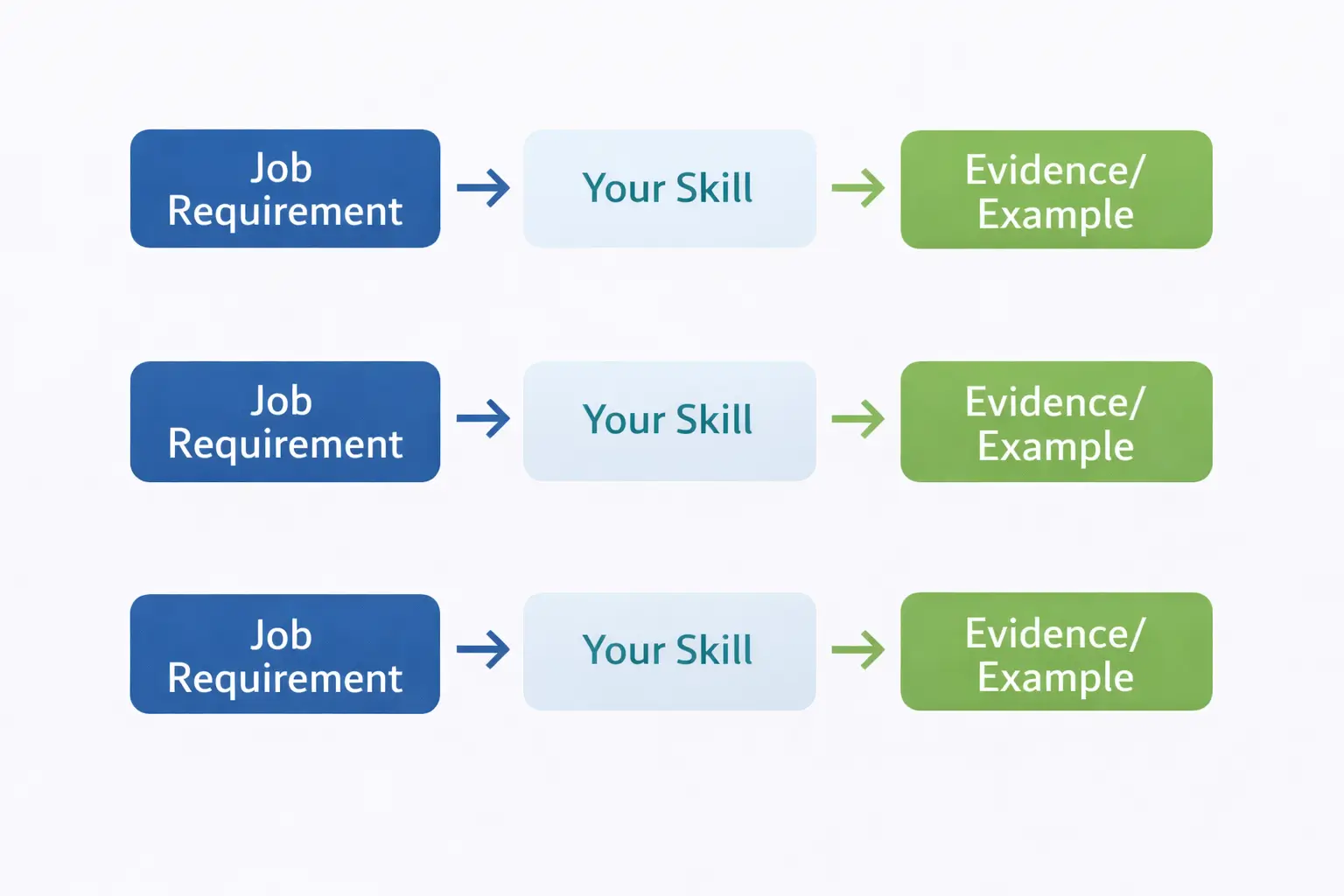
The body of your cover letter — typically one to two paragraphs — is where you connect your skills to the job requirements. The key principle: **every claim needs evidence.**
Don't just say you're a strong communicator. Show it. Don't just say you're organized. Prove it with a specific example.
Where to find evidence when you have no work experience:
- Academic projects — Group presentations, research papers, capstone projects
- Volunteer work — Event planning, fundraising campaigns, community organizing
- Extracurricular activities — Club leadership, sports teams, student organizations
- Personal projects — A blog you started, an app you built, a YouTube channel you grew
- Freelance or gig work — Tutoring, babysitting, selling on Etsy — these all count
- Relevant coursework — Classes that directly relate to the job requirements
Example body paragraph:
> "During my senior year, I led a four-person team for our capstone marketing project, where we developed a go-to-market strategy for a local nonprofit. I managed the project timeline, coordinated deliverables across team members, and presented our findings to a panel of industry professionals. The experience taught me how to balance competing priorities, communicate clearly under pressure, and deliver results on a deadline — skills I'd bring directly to the [Job Title] role."
This paragraph never mentions "no experience." It focuses entirely on what the candidate *can* do.
Step 4: Connect Your Goals to the Company's Mission
Hiring managers want to know you'll stick around and grow with the team — not just take the first offer that comes along. Use a short paragraph to explain why this company (not just this role) appeals to you.
**Example:**
> "I've been following [Company Name]'s work in sustainable packaging since reading about your partnership with [Partner Name] last year. Environmental sustainability is something I care about deeply — it's why I minored in environmental studies and volunteered with [Organization]. Joining a team that's actually solving this problem at scale would be a meaningful next step in my career."
This kind of specificity can't be faked, and it signals that you've chosen this company deliberately.
Step 5: Write a Confident Closing
Your closing paragraph should do three things: summarize your value, express enthusiasm, and include a clear call to action.
Example:
> "I'd welcome the opportunity to discuss how my project management skills, communication experience, and passion for [industry/field] could contribute to your team. I'm available for an interview at your convenience and can be reached at [email] or [phone]. Thank you for considering my application."
Keep it professional and forward-looking. Avoid ending with something passive like "I hope to hear from you" — instead, subtly indicate you expect to continue the conversation.
Step 6: Format It Correctly
Even the best-written cover letter loses impact with poor formatting. Here are the rules:
- Length: Keep it to one page — roughly 250-400 words. Hiring managers spend an average of two minutes or less reading cover letters, so every sentence needs to earn its place.
- Font: Use a clean, professional font (Calibri, Arial, or Garamond) at 10.5-12pt
- Structure: 3-4 paragraphs with clear spacing between them
- File format: Save as PDF unless the employer specifically requests .docx
- File name: Use a clear naming convention like "FirstName-LastName-Cover-Letter.pdf"
- Header: Match your cover letter header to your resume header for a polished, consistent look
Common Mistakes to Avoid
Even with no experience, there are pitfalls that can sink your cover letter:
Apologizing for your lack of experience. Phrases like "I know I don't have much experience, but..." immediately undermine your credibility. Focus on what you offer, not what you're missing.
Being too generic. If you could swap out the company name and send the same letter to 50 employers, it's too generic. Every cover letter should reference something specific about the company or role.
Repeating your resume. Your cover letter isn't a prose version of your resume. It should add context, personality, and narrative that your resume can't convey.
Writing a wall of text. Long, unbroken paragraphs signal that you can't communicate concisely. Use short paragraphs and get to the point.
Skipping the proofread. Typos and grammar mistakes in a cover letter are a dealbreaker for most hiring managers. Read it out loud, use a grammar tool, and have someone else review it before you submit.
How AI Can Help You Write a Stronger Cover Letter
Writing a cover letter from scratch is tough — especially when you're not sure what to say. AI tools can accelerate the process without making your letter sound robotic.
Seekario's AI Cover Letter Generator analyzes the job description and your background to produce a tailored cover letter that highlights relevant skills and uses the right keywords. It's particularly useful for entry-level applicants because the AI focuses on transferable skills and potential rather than requiring extensive work history.
The key advantage of using an AI tool over a generic template: templates give you a structure, but AI gives you personalized content that's already aligned with what the employer is looking for.
You can also use Seekario's AI Resume Builder to create a matching resume, ensuring both documents tell a consistent story about your qualifications.
Entry-Level Cover Letter Example
Here's a complete example for a recent graduate applying for a Marketing Assistant position:
> [Your Name]
> [Your Email] | [Your Phone] | [Your LinkedIn]
>
> [Date]
>
> Dear Hiring Manager,
>
> I'm writing to apply for the Marketing Assistant position at GreenWave Digital. Your team's focus on data-driven content strategy for sustainability brands is exactly the kind of work I want to build my career around.
>
> As a recent graduate with a B.A. in Communications from [University], I developed hands-on skills in content creation, social media management, and basic analytics. During my final year, I managed the social media accounts for our campus sustainability initiative, where I created a content calendar, designed posts using Canva, and tracked engagement metrics weekly. Our follower count grew by 35% over six months, and post engagement increased by 50%.
>
> I also completed a semester-long internship equivalent through our university's Community Partners program, where I helped a local nonprofit redesign their email newsletter. I segmented their audience, A/B tested subject lines, and improved open rates from 18% to 27% over eight weeks.
>
> I'd love the chance to bring this same initiative and analytical mindset to GreenWave Digital. I'm available for an interview at your convenience and look forward to discussing how I can contribute to your team.
>
> Sincerely,
> [Your Name]
Notice what this example does well: it leads with a specific connection to the company, provides measurable results from non-traditional experience, and never once mentions "no experience."
FAQ
Should I write a cover letter if the job posting says it's optional?
Yes. Research shows 72% of hiring managers expect a cover letter even when it's listed as optional. For entry-level candidates especially, skipping the cover letter means missing your best opportunity to stand out beyond a thin resume.
How long should a cover letter be with no experience?
Aim for 250-400 words, which fits comfortably on one page. Hiring managers spend about two minutes reading cover letters, so keep every paragraph focused and concise. Three to four paragraphs is the sweet spot.
What if I truly have no skills or experiences to mention?
You have more than you think. Consider group projects from school, volunteer work, hobbies that required organization or creativity, online courses you've completed, or personal projects. Even managing a household budget or organizing a community event demonstrates transferable skills. The key is framing these experiences in terms of the skills the employer needs.
Can I use the same cover letter for every application?
You should never send the exact same cover letter to multiple employers. At minimum, customize the company name, role title, and the paragraph explaining why you're interested in that specific company. Ideally, tailor the skills and examples you highlight based on each job description. Tools like Seekario's AI Cover Letter Generator can speed up this customization process significantly.
Is it okay to mention that I'm a quick learner?
Saying "I'm a quick learner" without evidence is a cliché that hiring managers have read thousands of times. Instead, show it. Describe a time you picked up a new skill quickly — like learning a software tool for a class project in a week, or teaching yourself basic HTML to build a personal website. Evidence always beats self-assessment.
Start Writing Your Cover Letter Today
Writing a cover letter with no experience doesn't have to feel impossible. Focus on what you *can* offer — your skills, your drive, your specific interest in the company — and back it up with concrete examples from any area of your life.
If you want a head start, try Seekario's AI Cover Letter Generator to create a personalized, job-specific cover letter in minutes. Pair it with Seekario's AI Resume Builder to make sure your entire application package tells a compelling, consistent story — even without traditional work experience.