Best Professional Certifications to Boost Your Resume in 2026 (By Industry)

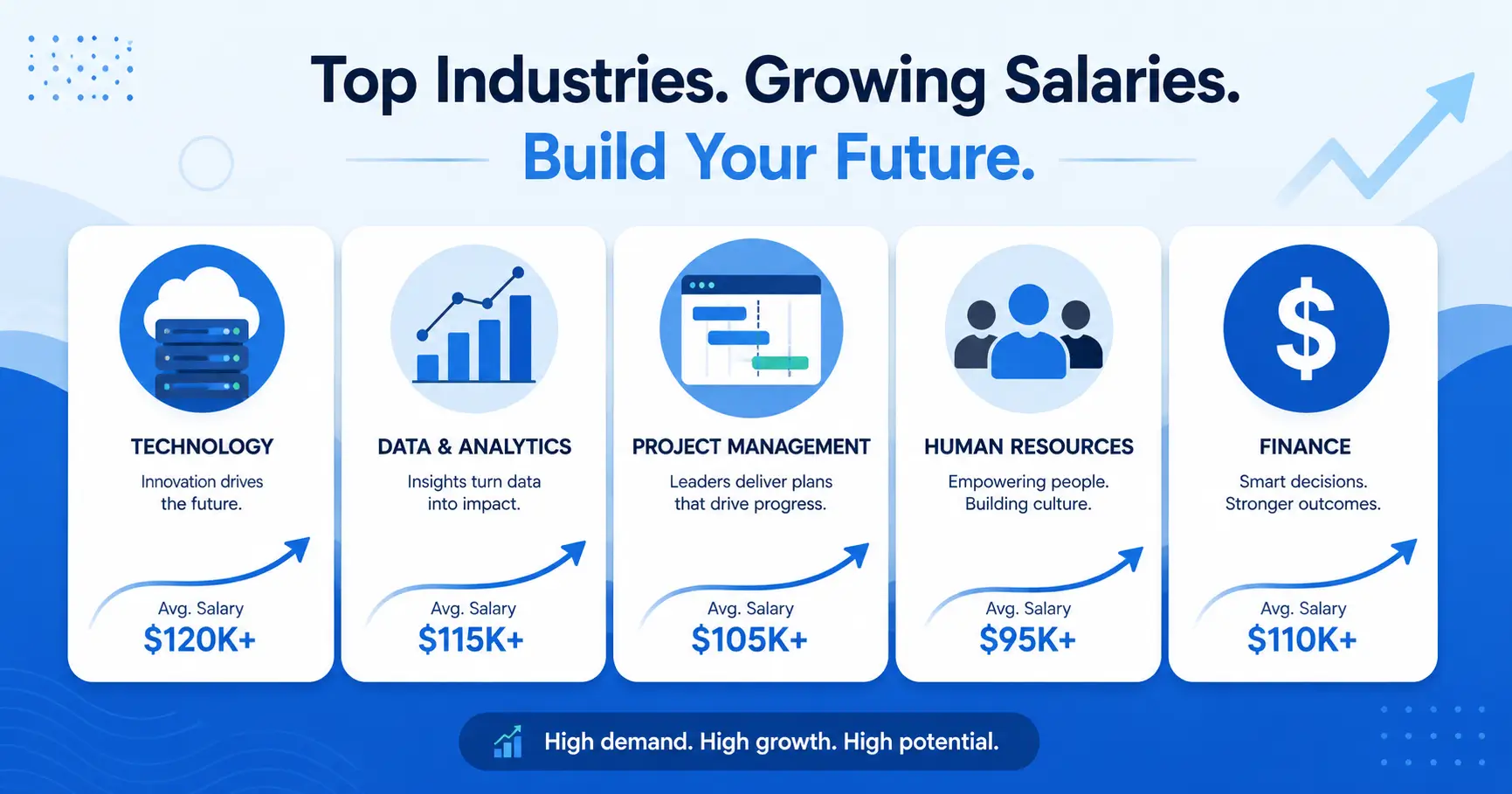
Not all certifications deserve space on your resume. Some command a 25–33% salary premium and open doors that experience alone can't. Others cost hundreds of dollars and barely register with hiring managers.
The difference? Choosing the right certification for your industry, career stage, and target role. This guide breaks down the best professional certifications in 2026 across five major industries — complete with salary data, costs, and ROI estimates — so you can invest your time and money where it actually pays off.
Why the Right Certifications Matter for Your Resume
Hiring managers process resumes in roughly six seconds. Certifications act as instant credibility signals — they tell a recruiter you've been tested and verified in a specific skill area, not just self-assessed.
But the impact goes beyond first impressions. According to recent salary studies, certified professionals earn an average of 20–30% more than non-certified peers in equivalent roles. In cybersecurity, that gap widens to $25,000–$35,000 annually. In project management, PMP holders earn 33% more across 21 countries surveyed by PMI.
Certifications also provide leverage during layoffs. Certified professionals face less job displacement during restructures and AI-driven workforce changes, because credentials signal adaptability and commitment to continuous learning.
That said, stacking random certifications won't help. The key is targeting high-value certs that align with the roles you're pursuing. If you're unsure whether your current certifications are strengthening or cluttering your resume, try Seekario's AI Resume Assessment for a data-driven evaluation.
Tech and IT Certifications: Cloud, Cybersecurity, and DevOps
Tech certifications consistently deliver the highest salary premiums across any industry. Here are the ones worth pursuing in 2026.
Cloud Certifications
Cloud architecture and security roles are booming as businesses accelerate migration timelines. These credentials stand out:
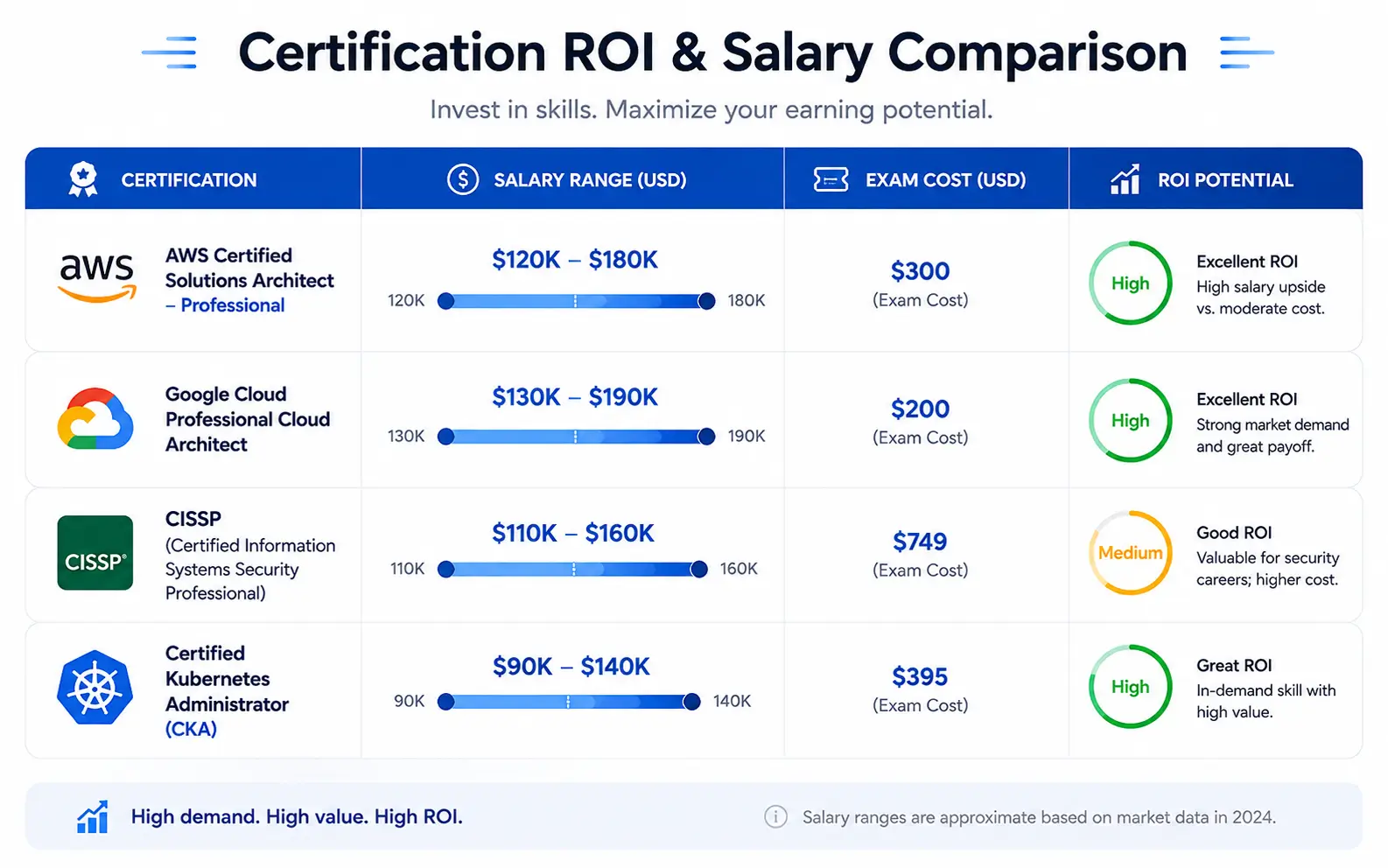
AWS Certified Solutions Architect – Professional commands average salaries of $150,000–$221,000, with a 20–25% premium over non-certified cloud engineers. The exam costs $300, meaning you'd recoup that investment within your first week of the salary bump.
Google Professional Cloud Architect holders earn $175,000–$200,000 on average. Google Cloud's market share continues growing, making this cert increasingly valuable for multi-cloud environments.
Microsoft Azure Solutions Architect Expert rounds out the big three, with similar salary ranges and strong demand in enterprise environments running hybrid cloud setups.
Cybersecurity Certifications
CISSP (Certified Information Systems Security Professional) is the gold standard. Holders earn average total compensation of $120,000–$175,000+, representing a $25,000–$35,000 annual premium. At a $749 exam cost, the ROI is exceptional — you'd recoup expenses in under two weeks of additional earnings.
CISM (Certified Information Security Manager) targets management-track security professionals, with salaries ranging from $165,000–$200,000 in the U.S.
CompTIA Security+ is the best entry point for career changers. It's vendor-neutral, widely recognized, and validates foundational security knowledge that applies across industries.
DevOps and Container Certifications
CKA (Certified Kubernetes Administrator) holders earn $130,000–$180,000, with top brackets reaching $275,000+. As containerization becomes standard, this cert signals hands-on infrastructure skills that employers struggle to find.
Data and Analytics Certifications
Data roles are exploding, and certifications can bridge credibility gaps — especially for career changers and entry-level candidates.
Google Data Analytics Professional Certificate dominates the entry-level space. It requires no prior experience, costs roughly $49/month on Coursera (most complete it in 3–6 months for $150–$300 total), and entry-level analysts with this credential earn $55,000–$80,000. The Google name carries weight with recruiters who may not know smaller bootcamps.
IBM Data Science Professional Certificate costs $49/month and emphasizes Python, making it ideal for candidates with some technical aptitude who want to move into data science specifically.
CompTIA Data+ validates broad data analytics competency and is vendor-neutral. It's a smart choice if you want a certification recognized across industries rather than tied to one platform.
CAP (Certified Analytics Professional) targets experienced analysts seeking formal validation. If you already have 3–5 years of experience, this carries more weight than entry-level certificates and signals strategic, business-oriented data thinking.
Salary context: Certified data analysts earn roughly 20–30% more than uncertified peers. Average salaries sit at $92,740, with top earners exceeding $152,000. The biggest ROI comes from career changers and entry-level candidates, where certifications close the credibility gap that a traditional degree or work history would otherwise fill.
Project Management Certifications
Project management certs are unique because they transfer across nearly every industry. Whether you're in construction, tech, healthcare, or finance, the core frameworks remain the same.
PMP (Project Management Professional) is still the undisputed gold standard. PMP holders earn a median of $120,000 in the U.S. — roughly 33% more than non-certified project managers. The exam costs $555 (PMI members) or $405 with membership included, and requires 36 months of project-leading experience.
CAPM (Certified Associate in Project Management) is the stepping stone for those without enough experience for PMP. Holders earn an average of $77,000. It's worth pursuing if you're building toward PMP and want PMI recognition in the meantime.
PMI-ACP (Agile Certified Practitioner) validates agile methodology expertise — critical in 2026 as more organizations adopt sprint-based delivery. This pairs well with PMP for professionals working in hybrid environments.
CSM (Certified ScrumMaster) and **PSM (Professional Scrum Master)** are targeted agile credentials. CSM requires a two-day course ($1,000–$1,500), while PSM is exam-only ($150), making PSM the more cost-effective option if you already understand Scrum fundamentals.
HR and Business Certifications
HR certifications deliver a quieter but steady salary premium that compounds significantly over a full career.
SHRM-CP (Society for Human Resource Management – Certified Professional) and PHR (Professional in Human Resources) are the two dominant credentials for HR professionals. Both command a 14–25% salary premium, translating to $10,000–$15,000 more per year in mid-career roles. Over a 20-year career, that compounds to $200,000–$400,000 in additional earnings.
The main difference: PHR focuses on technical HR operations and U.S. employment law, while SHRM-CP emphasizes behavioral competencies and strategic HR leadership. If you're operations-heavy, lean PHR. If you're moving toward strategy and leadership, choose SHRM-CP.
SHRM-SCP and SPHR target senior HR professionals, with median compensation exceeding $145,000 for HR managers holding these credentials — roughly $10,000 above the general HR manager median.
CPA (Certified Public Accountant) remains the highest-value credential in accounting and finance. CPAs earn 10–15% more than non-certified accountants, and the certification is legally required for certain audit and tax functions, making it non-negotiable in public accounting.
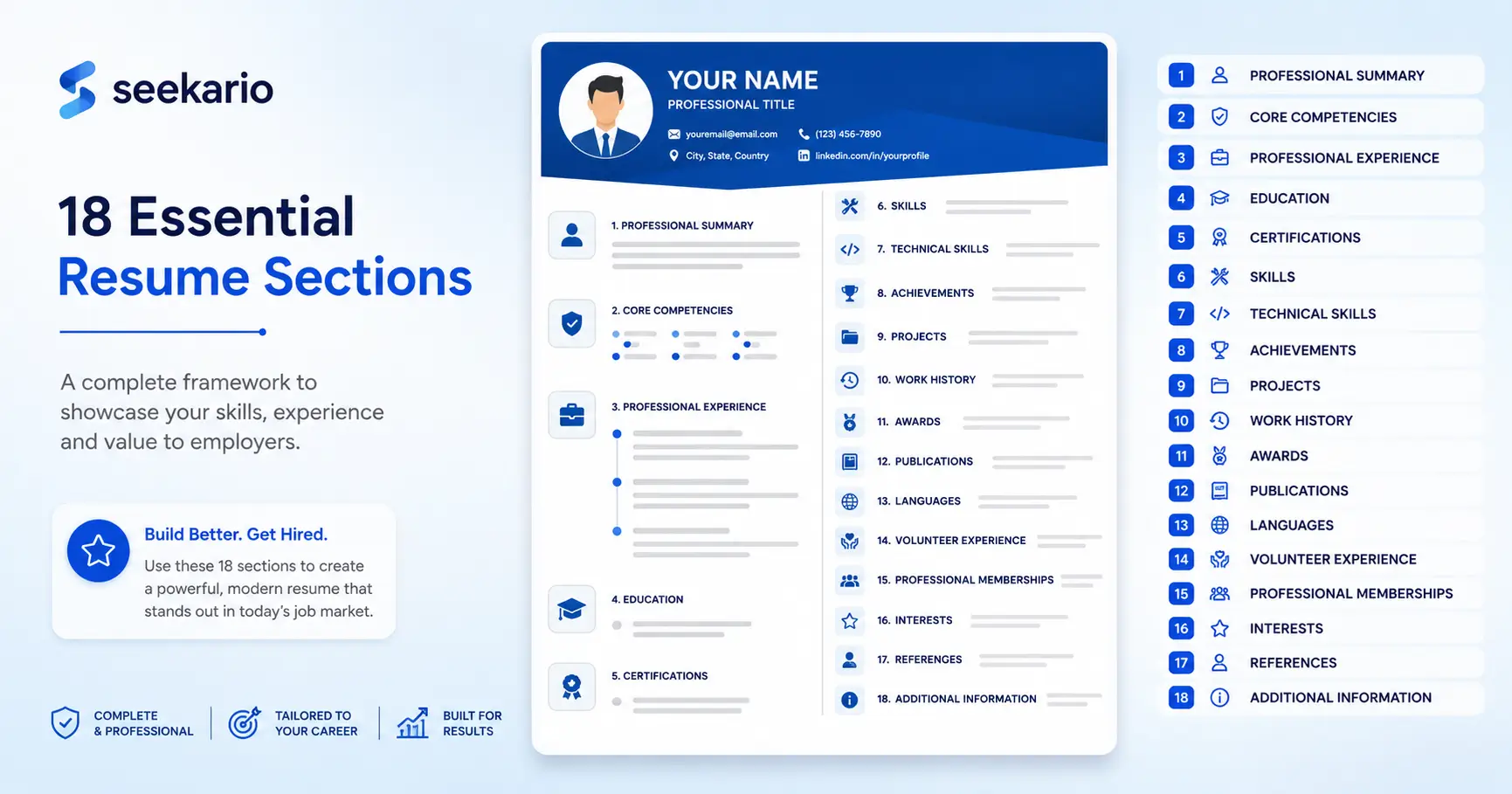
For guidance on how to format these credentials on your resume, check out our complete guide on how to list certifications on a resume.
Free vs Paid Certifications: What's Actually Worth the Money?
Not every valuable certification requires a four-figure investment. Here's how free and low-cost options compare.
Strong Free and Low-Cost Options (Under $300)
- Google Data Analytics Certificate — ~$150–$300 total on Coursera. High name recognition, structured curriculum, entry-level credibility.
- Google IT Support Certificate — Similar pricing. Solid foundation for help desk and IT support roles.
- HubSpot Inbound Marketing — Free. Respected in marketing and sales roles.
- Google Project Management Certificate — ~$150–$300 total. Good introduction but lacks the authority of PMP or CAPM in employer eyes.
- IBM Data Science Certificate — ~$150–$300. Strong Python and ML foundations.
When Paid Certifications Pay Off
Expensive certifications ($500+) make sense when the salary premium clearly outweighs the cost. PMP at $555 yields a 33% salary bump. CISSP at $749 delivers a $25,000+ annual premium. AWS Solutions Architect Professional at $300 leads to six-figure cloud roles. In all these cases, you recoup your investment within weeks to months.
When to Skip Expensive Certs
Avoid expensive certifications when the credential won't be recognized by your target employers, when free alternatives cover the same ground for your career stage, or when you lack the foundational experience to benefit from the material. A $2,000 certification means nothing if it doesn't map to the roles you're applying for.
How to Prioritize Certifications for Your Career Stage
Choosing the right certification depends on where you are in your career, not just which cert pays the most.
Entry-level and career changers: Start with high-recognition, low-cost certifications. Google certificates, CompTIA Security+, CompTIA Data+, and CAPM give you credibility without requiring years of prior experience. These close the trust gap between "I've studied this" and "a third party verified my skills."
Mid-career professionals (3–7 years): Target the gold-standard certifications in your field. PMP, AWS Solutions Architect, CISSP, SHRM-CP/PHR — these deliver the biggest salary premiums and signal senior-level readiness. Pair them with Seekario's AI Resume Tailor to ensure your newly earned credentials align with the specific language in job descriptions.
Senior professionals (8+ years): At this stage, certifications matter less than track record — but strategic credentials like TOGAF (enterprise architecture), SHRM-SCP, SPHR, or AWS Security Specialty can differentiate you in competitive executive-level pools.
One rule for every stage: Only pursue certifications that show up in job descriptions for roles you actually want. Search 10–15 target job postings, note which certifications appear repeatedly, and prioritize those.
FAQ
How many certifications should I list on my resume?
List only certifications relevant to the role you're applying for — typically two to four. Stacking unrelated certifications makes you look unfocused rather than qualified. If you're unsure which ones to feature, Seekario's AI Resume Assessment can analyze your resume against specific job postings and tell you which credentials add value.
Do certifications matter more than experience?
No. Certifications validate skills, but experience demonstrates them in practice. The combination is what creates the strongest resume. Certifications matter most when you lack direct experience (career changers, recent graduates) or when a credential is an industry standard (PMP, CPA, CISSP).
Are online certifications respected by employers?
Yes — when they come from recognized organizations. Google, AWS, Microsoft, PMI, CompTIA, ISC2, and SHRM certifications carry real weight regardless of whether you earned them online or in person. What matters is the issuing body, not the delivery format.
How quickly can certifications increase my salary?
Most professionals see salary benefits within their next job change or annual review cycle. PMP holders report a 33% premium, cloud certifications command 20–25% more, and HR certifications deliver 14–25% increases. The fastest returns come from fields with clear credential-to-role mapping, like cybersecurity and cloud engineering.
Should I get certified before applying or while employed?
Both work, but timing affects strategy. If you're job searching now, prioritize shorter certifications (4–8 weeks) that you can complete before your target application deadlines. If you're employed and planning a transition, you can invest in longer, more rigorous programs like PMP or CISSP that require study over several months.
Invest in Credentials That Actually Move the Needle
The best professional certifications in 2026 share three traits: they show up in job postings for your target roles, they deliver measurable salary premiums, and they signal skills that employers struggle to verify through interviews alone.
Pick one certification that aligns with your next career move, commit to a study timeline, and add it to your resume the moment you pass. Then use Seekario's AI Resume Assessment to verify your resume positions that new credential for maximum impact — it analyzes how well your certifications, skills, and experience align with real job descriptions, so you know exactly where you stand before you hit "apply."
For a deeper look at how certifications fit into your overall resume structure, read our complete guide to resume sections.